Rose Quartz Identification: Properties and Micro-Inclusions Explained
Rose quartz has long been celebrated as the "Stone of Unconditional Love," a gemstone that resonates with the heart chakra and brings a sense of peace and compassion. But beyond its spiritual reputation, rose quartz is a fascinating subject for mineralogists and gem collectors alike. Its delicate pink hue and characteristic cloudy translucency are not just visual traits; they are the result of complex geologic processes and microscopic mysteries that remained unsolved for decades.
Whether you are a seasoned collector or a curious beginner, learning to identify real rose quartz and understanding its unique properties can deepen your appreciation for this common yet captivating mineral.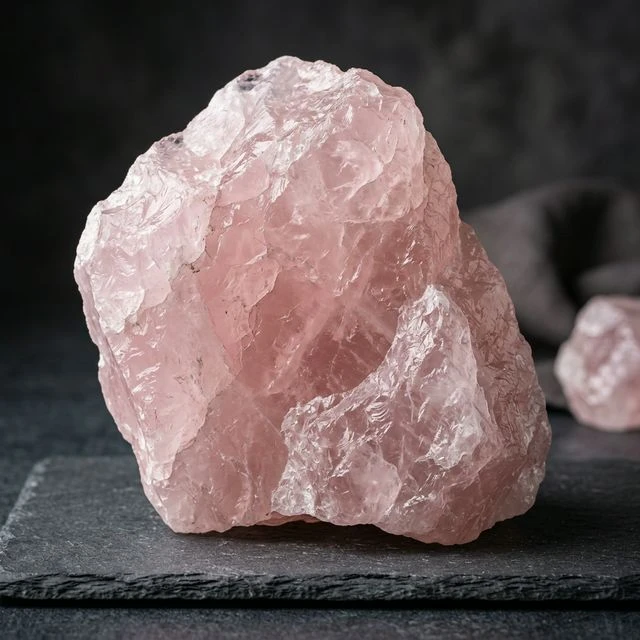
The Physical Profile of Rose Quartz
Rose quartz is a variety of quartz (silicon dioxide, SiO₂) that primarily occurs in massive form. This means it usually lacks the well-defined external crystal faces common in varieties like amethyst or citrine. While rare "pink crystalline quartz" does exist, most of what you find in shops and in nature is the massive variety.
Hardness and Durability
One of the most reliable ways to identify real rose quartz is by its hardness. It scores a 7 on the Mohs scale, making it harder than glass and most common metals. If you try to scratch a piece of rose quartz with a steel knife (hardness ~5.5), it should leave no mark. Conversely, the quartz will easily scratch a piece of glass.
Luster and Fracture
Rose quartz typically exhibits a vitreous (glassy) luster. When broken, it shows a conchoidal fracture—smooth, curved surfaces that resemble the inside of a clam shell. This is a hallmark of quartz minerals and is very different from the jagged or flat cleavage planes found in other pink minerals like rhodochrosite.
The Invisible Micro-Fibers: Why is it Pink?
For years, the exact cause of rose quartz's pink color was a topic of debate in the scientific community. Unlike other quartz varieties where the color comes from trace elements like iron or radiation-induced defects, the color of massive rose quartz is attributed to something far more intricate: micro-inclusions.
Studies using high-powered microscopes have revealed that the pink hue is caused by tiny, aligned fibrous inclusions of a silicate mineral. Recent research suggests these fibers are closely related to dumortierite, sometimes referred to in mineralogy circles as "dididumortierite."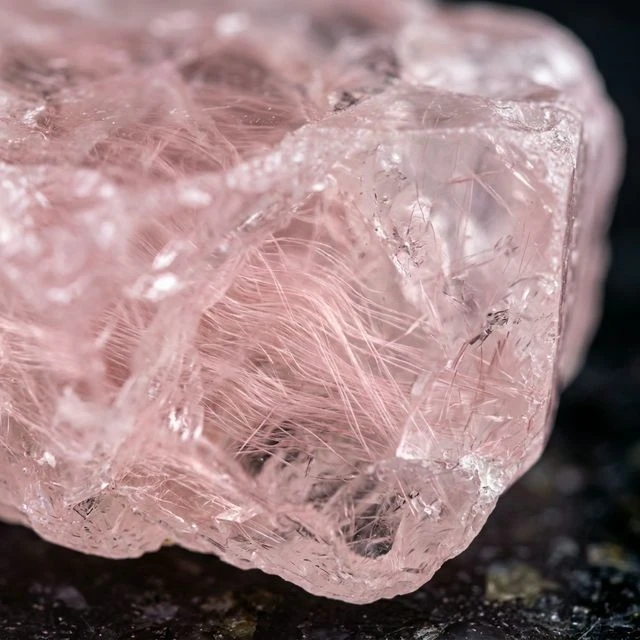
These fibers are so thin that they scatter light rather than blocking it, creating the characteristic "cloudy" or milky appearance of the stone. This phenomenon, known as the Tyndall effect, is why transparent rose quartz is exceptionally rare and highly prized.
Identifying Real Rose Quartz vs. Fakes
As the popularity of crystals grows, so does the market for imitations. Most "fake" rose quartz is made from dyed glass or plastic. Here is how to tell the difference:
- Check for Air Bubbles: Use a jeweler's loupe or a simple magnifying glass to look deep into the stone. If you see perfectly round air bubbles, it is almost certainly glass. Natural rose quartz may have internal fractures or irregular liquid inclusions, but never perfectly spherical bubbles.
- Temperature Test: Real rose quartz, like all crystalline minerals, is a good conductor of heat. It should feel significantly cooler to the touch than glass or plastic and will stay cool even after being held for a few moments.
- Color Uniformity: While rose quartz can vary in shade, dyed glass often shows a "bleeding" effect where the dye has concentrated in internal cracks or on the surface.
- Hardness Test: As mentioned before, if the stone is easily scratched by a steel point, it is likely plastic or a softer mineral imitation.
Star Rose Quartz and Asterism
Some specimens of rose quartz exhibit a stunning optical phenomenon called asterism. When these stones are cut into cabochons (smooth, rounded shapes), a six-rayed star appears to float on the surface when viewed under a direct light source.
This "star" is created by the same micro-fibers mentioned earlier. When the fibers are oriented in three specific directions within the quartz and the stone is cut correctly, they reflect light to form the star. This is a direct testament to the highly organized internal structure of the mineral.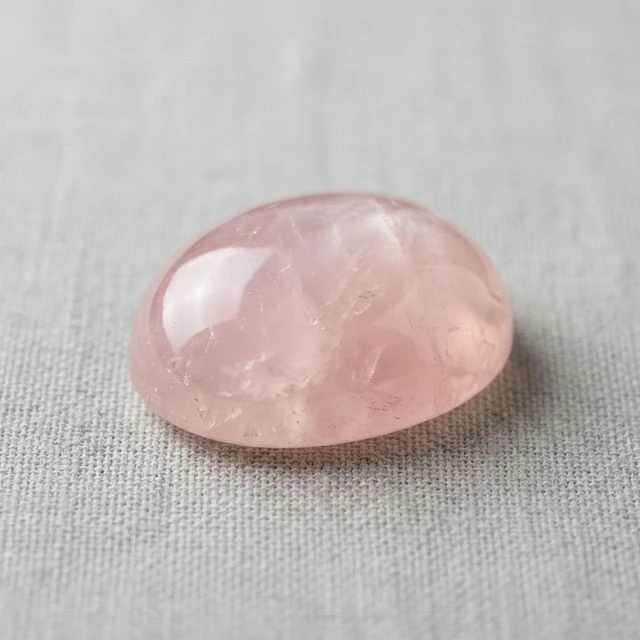
Identifying Rose Quartz with Technology
While manual testing is essential, modern technology can provide a significant advantage in gemstone identification. Using specialized mobile applications can help you cross-reference properties and even identify stones based on high-resolution photography.
If you are out in the field or at a gem show, you can identify rose quartz crystal properties online using the Minerals Guide app. It provides a comprehensive database and visual identification tools to ensure you are getting the real deal.
Practical Tips for Rose Quartz Care
Rose quartz is a durable stone, but it still requires proper care to maintain its beauty:
- Avoid Direct Sunlight: Prolonged exposure to intense UV light can cause the pink color to fade over time.
- Cleaning: Use warm, soapy water and a soft cloth. Avoid harsh chemicals or ultrasonic cleaners, which can aggravate internal fractures.
- Storage: Store it separately from harder gemstones like diamonds or sapphires to prevent scratches.
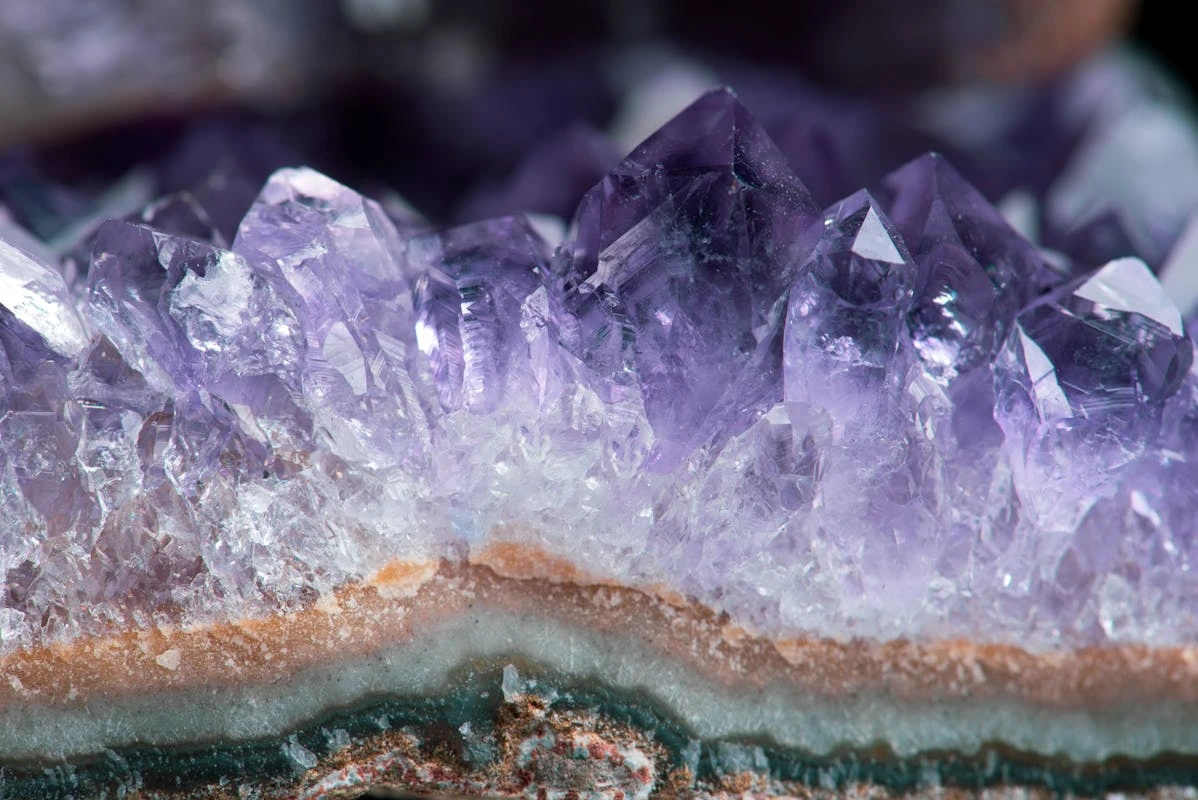
Rose quartz is more than just a pretty pink stone; it is a masterclass in microscopic mineralogy. By understanding its hardness, fracture, and the hidden fibers within, you can unlock the full story of this timeless gemstone. Like its purple cousin natural amethyst, rose quartz is a variety of quartz that every collector should know how to identify.
See Also: More Gemstone Guides
Dive deeper into the world of quartz and other precious stones:
- Is Your Amethyst Real? – Spotting the differences in purple quartz.
- Agate Identification Tips – Learn about the banded variety of chalcedony.
- Real Citrine vs. Heat-Treated Amethyst – Understanding color changes in quartz.
- How to Identify Minerals (Master Guide) – Our essential 3-photo workflow.
Available in other languages
- enRose Quartz Identification: Properties and Micro-Inclusions Explained
- ru Как определить розовый кварц: свойства и микро-включения
- es Identificación del Cuarzo Rosa: Propiedades y Micro-inclusiones
- fr Identification du Quartz Rose : Propriétés et Micro-inclusions
- de Rosenquarz-Identifizierung: Eigenschaften und Mikro-Einschlüsse erklärt
- it Identificazione del Quarzo Rosa: Proprietà e Micro-Inclusioni
- pt Identificação do Quartzo Rosa: Propriedades e Micro-inclusões
- pl Identyfikacja Kwarcu Różowego: Właściwości i Mikroinkluzje
- uk Ідентифікація рожевого кварцу: властивості та мікровключення
- tr Pembe Kuvars Tanımlama: Özellikler ve Mikro-Kalıntılar
- sv Identifiering av rosenkvarts: Egenskaper och inklusioner förklarade
- no Identifisering av rosenkvarts: Egenskaper og inkluderinger forklart
- hi रोज़ क्वार्ट्ज की पहचान: गुण और माइक्रो-इन्क्लूजन
- id Identifikasi Kuarsa Mawar: Properti dan Mikro-inklusi
Frequently Asked Questions
How can I recognise rose quartz by sight and hand specimen?
Rose quartz is typically pale to medium pink, often translucent to milky rather than transparent, and is usually found in massive form (not facetable crystals). It has a vitreous to greasy luster, conchoidal fracture, no true cleavage, and often shows cloudiness or a silky, fibrous texture to the naked eye from dense microscopic inclusions. Star (asterism) specimens occur when oriented needle inclusions are present and the piece is cabochon-cut.
What are the key gemological properties of rose quartz (hardness, density, refractive index, optic sign)?
Rose quartz has Mohs hardness ~7, specific gravity ≈ 2.65, refractive index about 1.544–1.553 (nω ≈1.544, nε ≈1.553), uniaxial (+) with birefringence ~0.009, no pleochroism, and typically shows the characteristic quartz interference figures under crossed polars.
What micro‑inclusions produce its pink colour and effects like asterism?
The exact colour origin is debated: it can arise from charge‑transfer colour centers and trace elements (Ti, Fe, Mn) or from extremely fine fibrous/mineral inclusions. Needle‑like inclusions of rutile or other fibrous minerals (and very fine growth tubes or silica defects) can give a silky appearance and—when oriented—produce asterism (six‑rayed star) in cabochons. Two‑phase fluid inclusions and healed fractures are also common.
How do I tell rose quartz apart from imitations (glass, dyed quartz, pink sapphire, rhodochrosite)?
Use a combination of tests: look for gas bubbles and flow lines in glass with a loupe; glass is softer and isotropic (polariscope/refractometer will differ). Dyed quartz may show colour concentrations in fractures. Corundum (pink sapphire) has much higher RI (~1.76), SG and hardness (9). Rhodochrosite is much softer (~3.5–4), shows cleavage and different reaction to acids. Refractometer/SG measurements, microscopic inclusion patterns, and a loupe examination for bubbles/flow lines are usually decisive.
What instruments and microscopic observations are most useful to document/confirm rose quartz?
Start with a refractometer and hydrostatic SG measurement, then examine under a gemmicroscope (10–60×) to look for characteristic silk/needle inclusions, two‑phase fluid inclusions, healed fractures and absence of gas bubbles (glass). Polarized light/conoscopic testing confirms uniaxial quartz optics. UV is usually inert or faint; advanced tests (Raman, FTIR or LA‑ICP‑MS) can identify trace elements or confirm mineralogy when needed.