Aquamarine vs. Blue Topaz: How to Tell These Blue Gemstones Apart
The allure of a light blue gemstone is timeless. Whether you are looking at a serene, sea-foam aquamarine or a brilliant, sky-blue topaz, the visual appeal is undeniable. However, for the untrained eye, these two stones can look remarkably similar. If you are a jewelry lover, a collector, or someone looking to buy an engagement ring, knowing the difference is crucial. One is a rare variety of beryl, while the other is a more common, often treated silicate mineral.
In this guide, we will break down the visual, physical, and technical differences between aquamarine and blue topaz so you can identify them with confidence.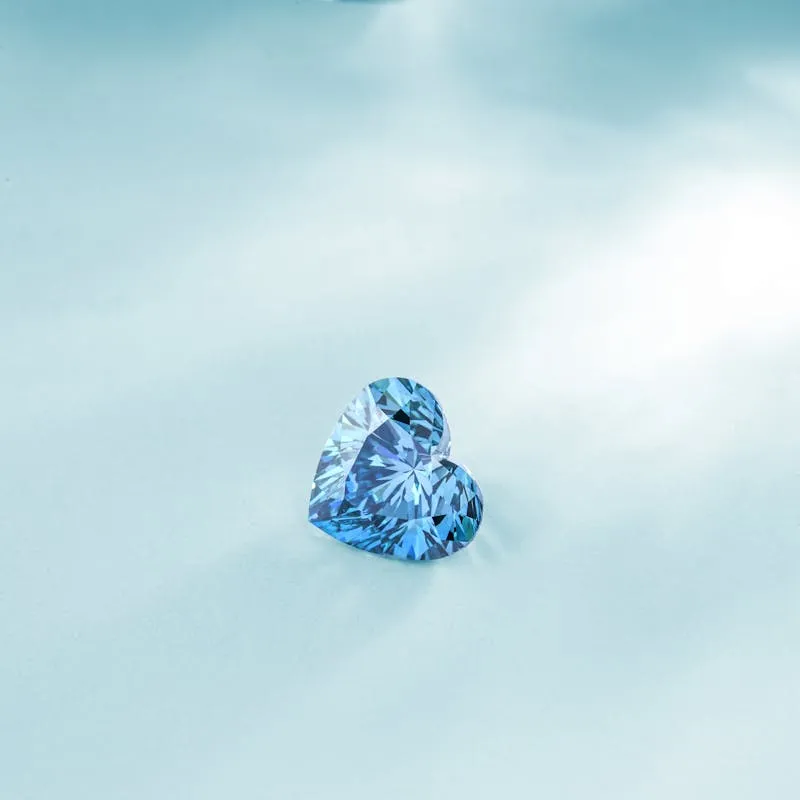
What Makes These Blue Gems Different?
At a high level, the most significant difference lies in their mineral group and rarity.
- Aquamarine is the blue-to-green variety of the mineral Beryl (the same family as Emerald). It gets its color from trace amounts of iron. Most natural aquamarines are quite light in color, and deep "Santa Maria" blue specimens are exceptionally rare and valuable.
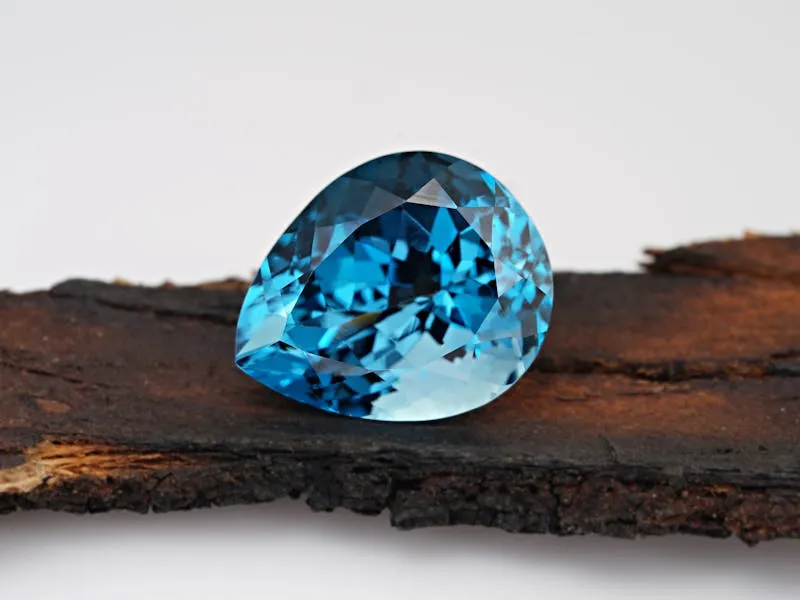
- Blue Topaz is a Fluorosilicate mineral. While topaz occurs naturally in various colors, natural blue topaz is actually quite rare. Almost all blue topaz sold in jewelry today starts as colorless or pale topaz that has been subjected to irradiation and heat treatment to produce shades like "Sky Blue," "Swiss Blue," and the dark "London Blue."
Because blue topaz is secondary-market plentiful due to these treatments, it is significantly more affordable than aquamarine of similar size and clarity.
Visual Cues: Color Depth and Zoning
If you are looking at the stones side-by-side, color is your first clue, but it can be deceiving.
The "Aqueous" Look of Aquamarine
Aquamarine typically has a softer, more "watery" appearance. Even when heat-treated to remove green undertones, it retains a certain pastel quality. Natural aquamarines often have a slight greenish-blue tint, which many collectors actually prefer as it proves the stone hasn't been over-processed.
The Uniformity of Blue Topaz
Blue topaz often has a more "electric" or saturated look. Because the color is induced by treatment, it is usually very uniform throughout the stone. However, if you look closely under magnification, you might see color zoning—areas where the color is slightly more or less intense. This is common in topaz but rare in high-quality aquamarine.
Technical Dive: Refractive Index and Density
If you have access to basic gemological tools, the mystery disappears quickly.
Refractive Index (RI)
The refractive index measures how much light slows down and bends as it enters the stone.
- Aquamarine (RI: 1.572 – 1.590): Has a lower refractive index, meaning it has less "fire" or brilliance than topaz. It looks more "calm."
- Blue Topaz (RI: 1.609 – 1.637): Has a higher RI. If you tilt the stone, you will often see more diverse flashes of light and "life" compared to aquamarine.
Specific Gravity (Relative Density)
This is perhaps the most reliable "field test" if the stones are loose. Topaz is a very dense stone.
- Aquamarine (SG: 2.67 – 2.74): Relatively "light."
- Blue Topaz (SG: 3.49 – 3.57): Significantly heavier. If you have two stones of the exact same size, the blue topaz will feel noticeably heavier in your hand or on a scale.
Microscopic World: Inclusion Patterns
What’s inside the stone tells the story of its birth.
The "Rain" of Aquamarine
Aquamarine often contains long, hollow, tube-like inclusions that run parallel to the crystal's length. These are often referred to as "rain" or "straw" inclusions. If there are enough of them, they can even create a "cat's eye" effect (chatoyancy).
The "Clarity" of Topaz
Topaz is known for being "eye-clean." It is much easier to find large pieces of topaz without any visible inclusions. When inclusions do exist, they are often small crystals or two-phase (liquid and gas) bubbles, but they rarely look like the "rain" found in aquamarine.
The Touch Test: Feeling the Difference
Did you know that stones have a "thermal" personality? Because of its chemical structure, Topaz is an excellent conductor of heat.
If you touch a blue topaz to your lip (a sensitive area for temperature) and then touch an aquamarine, the topaz will feel significantly colder. This is because it pulls heat away from your body much faster than beryl does. While not a definitive scientific test, many experienced dealers use this "lip test" or "tongue test" as a quick preliminary check.
Value and Rarity in Today's Market
When it comes to your wallet, the difference is stark.
- Aquamarine prices rise exponentially with size and color saturation. A large, deep-blue aquamarine is a major investment and is considered a "heritage" gemstone.
- Blue Topaz prices are relatively stable and affordable. Even a massive 20-carat Swiss Blue topaz is accessible to most hobbyist collectors.
If someone is offering you a "deep blue aquamarine" at a "blue topaz price," be extremely cautious—it is almost certainly a treated topaz.
Whether you choose the rare, natural elegance of aquamarine or the vibrant, affordable sparkle of blue topaz, both stones are beautiful additions to any collection. By checking the weight, looking for "rain" inclusions, and noting the "cold" feel, you can ensure you’re getting exactly what you paid for.

Available in other languages
- enAquamarine vs. Blue Topaz: Identification & Comparison
- ru Аквамарин или Голубой топаз: Идентификация и сравнение
- es Aguamarina vs. Topacio Azul: Identificación и Comparación
- fr Aigue-marine vs Topaze bleue : Identification и Comparaison
- de Aquamarin vs. Blautopas: Identifizierung & Vergleich
- it Acquamarina vs. Topazio Blu: Identificazione e Confronto
- pt Água-Marinha vs. Topázio Azul: Identificação e Comparação
- pl Akwamaryn vs. Topaz Błękitny: Identyfikacja i Porównanie
- uk Аквамарин проти Блакитного топазу: Ідентифікація та Порівняння
- tr Akuamarin vs. Mavi Topaz: Tanımlama ve Karşılaştırma
- sv Akvamarin vs. Blåtopas: Identifiering och Jämförelse
- no Akvamarin vs. Blå Topas: Identifisering og Sammenligning
- hi एक्वामरीन बनाम ब्लू पुखराज: पहचान और तुलना
- id Akuamarin vs. Topaz Biru: Identifikasi dan Perbandingan
Frequently Asked Questions
Which is more expensive: aquamarine or blue topaz?
Aquamarine is significantly more expensive than blue topaz. While aquamarine is a relatively rare natural gemstone, most blue topaz on the market starts as common colorless topaz that has been irradiated and heat-treated to achieve its blue hue.
Can blue topaz look exactly like aquamarine?
Yes, 'Sky Blue' topaz can look very similar to aquamarine. However, aquamarine typically has a more 'watery' or pastel appearance, while blue topaz often shows more brilliant flashes of light due to its higher refractive index.
What is the 'cold test' for identifying topaz?
Topaz is an excellent heat conductor. If you touch a piece of topaz to a sensitive area like your lip, it will feel notably colder than an aquamarine, as it pulls heat away from your skin much faster.
Are there specific inclusions to look for in aquamarine?
Yes, aquamarine often contains long, hollow, tube-like inclusions that run parallel to each other, sometimes called 'rain' or 'straw' inclusions. Topaz is usually very clean or contains different types of inclusions, like liquid/gas bubbles.