Agate Identification: How to Spot Real Stones vs. Fakes
Agate has been cherished for thousands of years, not just for its beauty but for the unique, rhythmic patterns that seem to capture the very essence of geology. But as any seasoned collector knows, the market is flooded with imitations. From dyed glass to resin-filled "stones," knowing the secrets of agate identification is the difference between owning a piece of Earth’s history and a plastic paperweight.
In this guide, we’ll dive into the specific markers of authenticity, explore the common tricks used by fakers, and show you how to use modern technology - like the best app to spot fake agate patterns - to verify your finds with professional accuracy.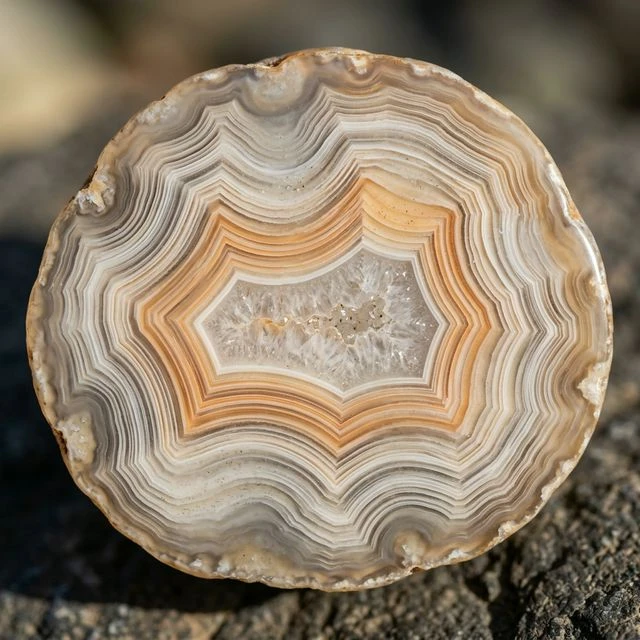
Nature’s Fingerprints: The Visual Markers of Real Agate
The most iconic feature of agate is its banding. These layers are formed by the slow deposition of silica in rock cavities over millions of years. This slow process creates a level of detail that factory-made fakes simply cannot replicate.
1. Complexity of Banding
Real agate bands are rarely perfectly straight or uniform. They follow the contours of the original cavity, resulting in concentric, often "fortified" patterns. When you look closely at agate rock identification samples, you’ll notice that the thickness of these bands varies naturally.
2. Translucency and Depth
One of the biggest tells in agate identification is how the stone interacts with light. Most agates are translucent. If you hold a thin slice up to the light, you shouldn't just see a flat color; you should see depth within the bands. This is a key part of how to tell if agate is real. If the stone is completely opaque or looks like solid paint, proceed with caution.
The Red Flags: How to Spot Fake Agate
Fakes are getting better, but they often fail in the same areas: color and texture.
The Problem with "Neon" Stones
If you see an agate that is vibrant neon pink, electric blue, or bright purple, it is almost certainly dyed. While some natural agates have stunning colors, they are usually earthy or soft hues. Dyed stones often show "dye concentrations" in small cracks or fractures when viewed under a magnifying glass. Learning how to spot fake agate often starts with a healthy skepticism of "too-good-to-be-true" colors.
Glass and Resin Imitations
Glass fakes often contain tiny, perfectly round air bubbles—something you will never find in natural agate. Resin fakes, on the other hand, will feel "warm" to the touch and are much lighter than a real stone of the same size. Real quartz-based minerals like agate are dense and hold a chill.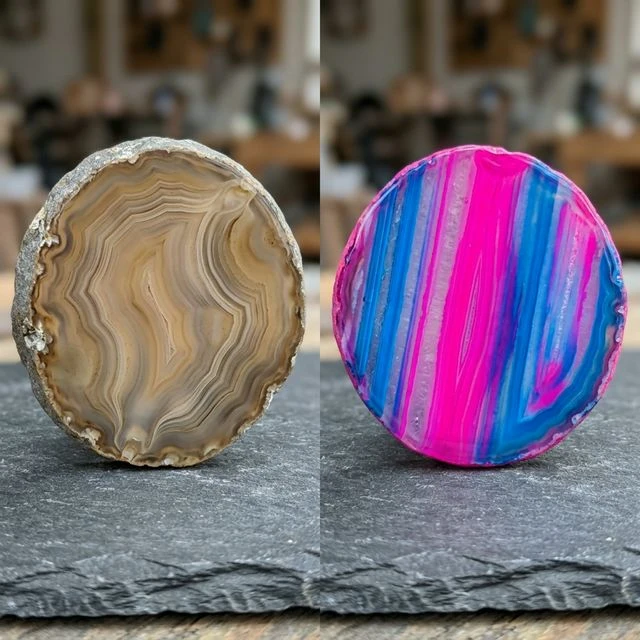
The "Triple Photo" Method for Professional Accuracy
Identifying minerals solely by a single photo is a gamble. Professional geologists look at specimens from multiple angles and under different lighting conditions. This is why we developed the Triple Photo Analysis in our mineral guide.
To get a reliable ID, you need:
- The Overall Shot: For general shape and color.
- The Macro Detail: To examine the crystalline structure and banding up close.
- The Light Test (Translucency): Using your phone's flashlight to shine light through the stone.
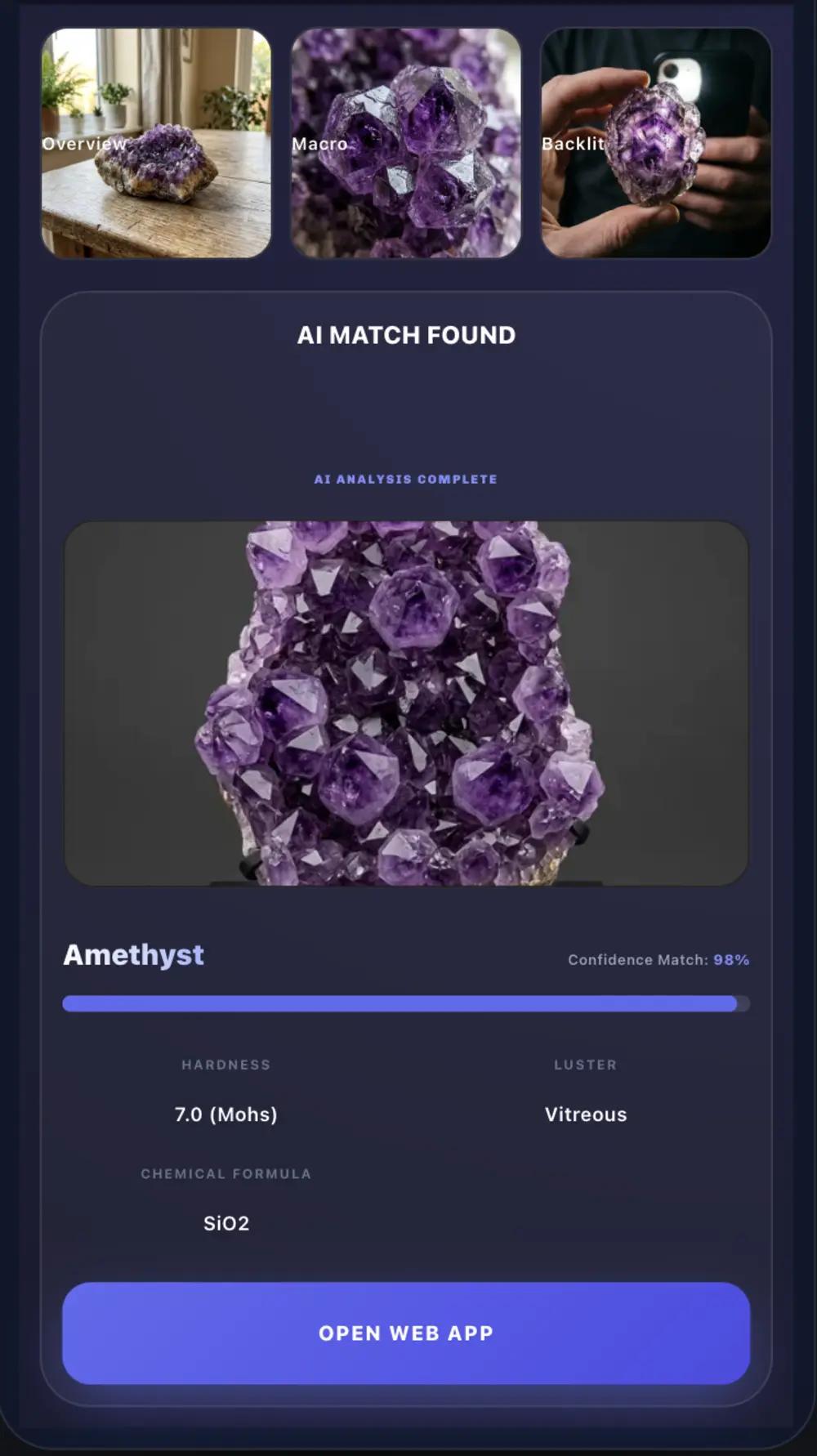
This method is particularly effective for raw agate identification and rough agate identification, where the outer crust (cortex) might hide the beauty within. If you want the most accurate results, using the best app to spot fake agate patterns allows you to process these three data points simultaneously through an AI trained on thousands of verified geological samples.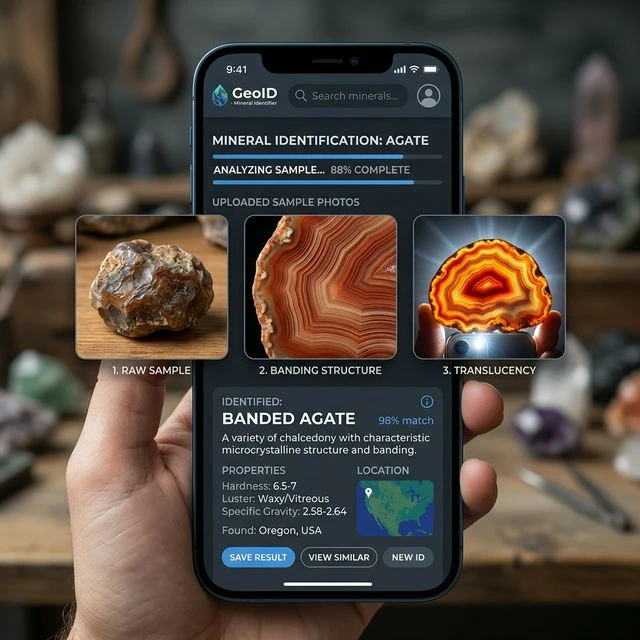
Practical DIY Tests: Hardness and Temperature
If you are still unsure how to tell real agate from fake, you can perform these simple tests at home:
1. The Scratch Test
Agate is a variety of chalcedony with a Mohs hardness of 6.5 to 7. This means it is harder than glass and steel. A common steel nail or a copper penny should not be able to scratch the surface of a real agate. If it scratches easily, it’s likely calcite, glass, or plastic.
2. The Temperature Test
Place the stone against your cheek or the palm of your hand. Because it is a form of quartz, agate is an excellent conductor of heat and will feel significantly colder than a piece of plastic or resin. Furthermore, it will take longer to warm up to your body temperature.
Agate vs. Jasper: Clearing the Confusion
A common question in agate identification is the agate vs jasper comparison. Both are varieties of chalcedony, but the rule of thumb is simple: Agate is translucent (light passes through), and Jasper is opaque (light does not pass through). Many "jaspers" on the market are actually agates, and vice versa. Knowing this distinction is vital for accurate labeling in your collection.
Advanced Identification: Moss and Fire Agates
Not all agates have bands! For example, moss agate identification involves looking for green, organic inclusions that look like moss or trees (these are actually manganese or iron oxides). Fire agate features a stunning iridescence that looks like flickering flames. These varieties require even higher attention to detail, making a dedicated rock scanner an indispensable tool for the modern hobbyist.
For more foundational tips on mineralogy, check out our guide on how to identify minerals or learn more about perfect mineral photography.
By combining visual inspection, physical tests, and the power of AI-assisted identification, you can build a collection of genuine gemstones with confidence. Remember, the true beauty of an agate isn't just in its rings, but in the millions of years of history those rings represent.
Available in other languages
- enAgate Identification: How to Spot Real Stones vs. Fakes
- ru Как определить агат: отличия подлинного камня от подделки
- es Identificación de ágata: Cómo distinguir piedras reales de falsificaciones
- fr Identification de l'agate : Comment distinguer les vraies pierres des contrefaçons
- de Achat-Identifizierung: So erkennen Sie echte Steine und Fälschungen
- it Identificazione dell'agata: Come distinguere le pietre vere dai falsi
- pt Identificação de Ágata: Como diferenciar pedras reais de falsificações
- pl Identyfikacja agatu: Jak odróżnić prawdziwe kamienie od podróbek
- uk Ідентифікація агату: як відрізнити справжній камінь від підробки
- tr Akik Tanımlama: Gerçek Taşlar ile Sahteler Nasıl Ayırt Edilir?
- sv Identifiering av agat: Så skiljer du äkta stenar från förfalskningar
- no Identifisering av agat: Slik skiller du ekte stein fra forfalskninger
- hi अकीक (Agate) पहचान: असली पत्थरों और नकली के बीच अंतर कैसे करें
- id Identifikasi Akik: Cara Membedakan Batu Asli dari yang Palsu
Frequently Asked Questions
How can I tell if an agate has been dyed or treated?
Dyed agates often show unnaturally bright or uniform colors, concentrated color in fractures or along band edges, and color that wipes off with acetone or isopropyl alcohol. Under 10x magnification you may see color pooled in fissures. Natural agate colors are usually more subtle and follow the banding patterns.
What are the quickest ways to distinguish agate from glass or resin imitations?
Look for curved gas bubbles or flow lines (glass) and seam lines or a resin backing (doublets). Agate is harder (about 6.5–7 Mohs) and will resist scratching by a steel file; glass/resin is softer and lighter. Also, glass often feels warmer to the touch and shows perfectly rounded bubbles on magnification.
What should I look for under a loupe or microscope?
Use 10x–20x magnification to examine concentric banding, natural growth textures, tiny crystalline druzes in cavities, and irregular inclusions—features typical of real agate. Artificial pieces show uniform color penetration, straight or curved flow lines (glass), or layered adhesives (composites/doublets).
Are there safe, non-destructive tests I can do at home?
Yes—visual inspection, magnification, an acetone/isopropyl alcohol swab to test for surface dye, and examining weight/temperature feel are non-destructive. Avoid hard scratching, acids, or heating tests on unknown stones. If the piece is valuable or results are unclear, have it evaluated by a reputable gemologist or lab.
What are common red flags when buying agate online or from a market?
Red flags include extremely low prices for large, gemmy specimens; photos with over-saturated color; no clear provenance or treatment disclosure; sellers unwilling to show close-up photos of banding or edges; and vague descriptions like “gemstone” without specific ID. Ask questions, request high-resolution images from multiple angles, and prefer sellers who disclose dyeing, stabilizing, or composite construction.