
AI Rock Identifier & Crystal Finder
Identify any rock, crystal, or gemstone in seconds using our advanced AI Triple-Analysis engine. Free online mineral recognition with professional results.
- Instant AI Recognition
Get accurate results in seconds powered by highly optimized neural networks.
- Advanced Analysis Engine
Our algorithm evaluates hundreds of geological markers, from specific gravity to cleavage.
- Expert-Level Reports
Receive detailed insights into the physical properties, origin, and rarity of your specimen.
- 100% Free to Use
Enjoy unrestricted access directly in your browser—no hidden fees, no subscriptions.
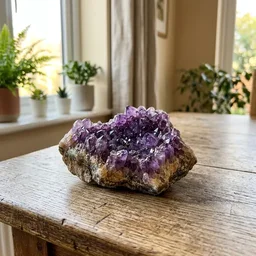
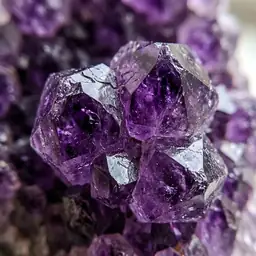
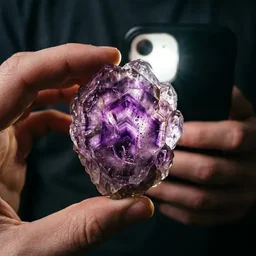
AI Analysis Complete
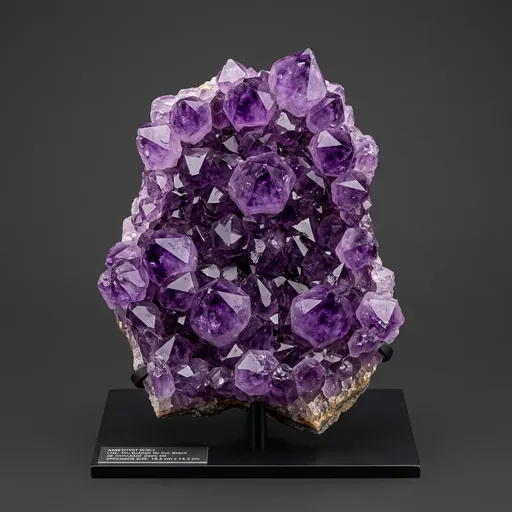
How Triple-Analysis Recognition Works
Our unique 3-step imaging technique allows the AI to see beyond the surface, mimicking how professional geologists analyze specimens.
Step 1: Overall Shape & Structure
Take a clear photo of the entire specimen in natural daylight. This helps the AI assess the general geometry and crystal habit.
Step 2: Surface Texture & Detail
Get up close to capture the surface. Our engine analyzes cleavage planes, luster, and micro-textures easily missed by the naked eye.
Step 3: Translucency & Inclusions
Shine a flashlight through the stone. This 'secret weapon' reveals internal growth patterns, bubbles, and inclusions crucial for accurate identification.
AI Rock Identifier: Advanced Crystal & Mineral Analysis
Welcome to the professional-grade AI rock and mineral identifier online tool. While many basic scanners exist, our platform is designed to provide high-utility data for collectors, students, and hobbyists by using a specialized Triple-Analysis imaging technique.
Why use our AI Rock Scanner?
Identifying minerals from a single photo can be inaccurate because many stones look similar on the surface. Our engine is trained to look for specific geological markers:
- Luster & Diaphaneity: Distinguishing between vitreous, pearly, and metallic lusters.
- Crystal Habit: Recognizing prisms, rhombohedrons, and massive formations.
- Cleavage & Fracture: Analyzing how the mineral reflects light on broken surfaces.
What our AI can detect:
- Common Minerals: Quartz, Calcite, Feldspar, Pyrite.
- Gemstones: Amethyst, Garnet, Tourmaline, Topaz.
- Rocks: Igneous (Basalt, Granite), Sedimentary (Limestone, Sandstone), Metamorphic (Marble, Slate).
- Crystal Structures: Hexagonal, Isometric, Monoclinic systems.
What it CANNOT (yet) detect:
- Synthetic vs. Natural Diamonds: Requires thermal conductivity or UV fluorescence testing.
- Internal Chemistry: It cannot "see" trace element percentages (e.g., gold purity).
- Hardness (Mohs): While it can estimate based on species, it cannot perform a physical scratch test.
How to get the best results?
To achieve expert-level identification, we recommend our Triple-Analysis method:
- Identify Rock from Photo (Overview): Take a shot of the whole stone to show its "habit" (how it grew).
- Identify Crystal from Image (Macro): Get as close as possible to see the surface texture and light reflections.
- The 'Hidden' Inclusions (Backlit): Shine a light from behind. This helps the AI differentiate between solid minerals and those with internal structures like bubbles or zoning.
Common Identification Errors to Avoid
- Wet Stones: Water changes the luster and hides texture. Dry your specimen first.
- Mixed Backgrounds: Use a neutral, solid-colored background (like a palm or a piece of paper).
- Artificial Tinted Light: Use natural daylight to ensure color accuracy for the AI model.
Comparison: Quartz vs. Calcite
Many users confuse these two. While they look similar, our AI looks for Calcite's rhombohedral cleavage versus Quartz's conchoidal fracture. Using the backlit photo step usually resolves the doubt instantly.
Real vs. Fake: How AI Helps
A common question is whether a stone is natural or a glass imitation. Our scanner analyzes surface cooling patterns and internal bubble structures:
- Natural Stones: Often contain "inclusions" (tiny cracks or other minerals) that have specific geometric shapes.
- Glass Fakes: Often show perfectly round air bubbles or "swirl marks" from the melting process.
- Dyed Crystals: The AI detects unnatural color concentrations in the cracks of the stone.
[!IMPORTANT] This tool provides a highly probable identification. For high-value gemstones or industrial applications, always consult a certified gemologist.
Frequently Asked Questions
Is this rock identifier really free?
Yes, the web tool is 100% free for basic identification. You can upload photos and access detailed mineral profiles without registering or hitting a paywall.
How accurate is the AI at recognizing rocks?
While visual identification has physical limitations, our engine delivers highly accurate matches for thousands of minerals. For the best results, use our Triple-Analysis method (general, macro, and backlit photos) to provide the AI with maximum structural data.
Can I use the scanner on my phone?
Absolutely. It's a modern web app optimized for mobile browsers (Chrome, Safari, etc.). There's no need to download or install anything—just open the site and start scanning.
Ready for Your Next Discovery?
Join a global community of rockhounds, gem enthusiasts, and professional geologists.
Get Started Now