Real Citrine vs. Heat-Treated Amethyst: How to Tell the Difference
Walking into a crystal shop and seeing a shelf full of vibrant, burnt-orange clusters labeled "Citrine" is almost a rite of passage for new collectors. But here's the secret the gemstone trade doesn't always lead with: most of those stones never started as citrine. Most "citrine" on the market today was once natural amethyst crystal. When amethyst is heated to around 400-500°C (750-930°F), it transitions from purple to the familiar burnt-orange or "honey" color seen in many shops. While beautiful in their own way, these "cooked" stones aren't the real deal. If you're looking for the subtle, honey-gold glow of natural citrine—one of the rarest quartz varieties on Earth—you need to know exactly what to look for before you reach for your wallet.
In this guide, we’ll break down the scientific and visual differences so you can confidently identify what you’re buying.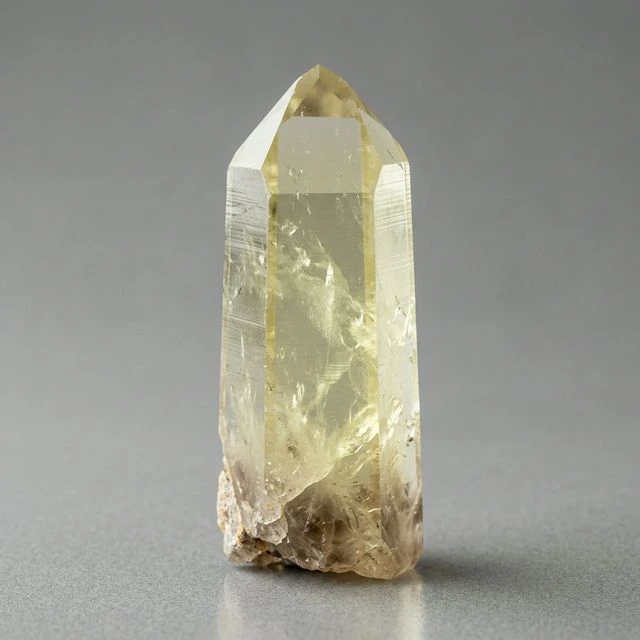
What is Heat-Treated Amethyst?
Most "citrine" found in gift shops and commercial jewelry stores is actually heat-treated amethyst. Amethyst and citrine are both varieties of quartz, but they get their colors from different impurities and irradiation processes in nature.
When amethyst is heated to temperatures between 400°C and 600°C (about 750°F to 1100°F), its purple hue transforms. Depending on the duration and temperature, it turns a bright yellow, honey orange, or even a deep, "burnt" reddish-brown. This process mimics what happens in nature but at a much faster, artificial pace to satisfy the high demand for yellow gemstones.
Key Differences: Real Citrine vs. Heat-Treated Amethyst
Identifying the difference doesn't always require a lab. You can spot most treated stones by looking for these three indicators:
1. The Color Palette
Natural citrine is rarely "bright orange." It usually presents as a pale, smoky yellow, lemon yellow, or light honey. It is consistent throughout the stone. Heat-treated amethyst, on the other hand, often looks "burnt." It has a characteristic deep orange or reddish-brown tint that natural citrine almost never displays.
2. The White Base Test
This is the most reliable "tell" for crystal clusters. Amethyst grows on a base of white quartz (mother rock). When it's heated, the tips turn orange, but the base remains stark white and opaque. Natural citrine grows differently; the yellow color usually goes all the way through the crystal, or it fades into a clear smoky quartz base, but it never has that "snow-white" bottom.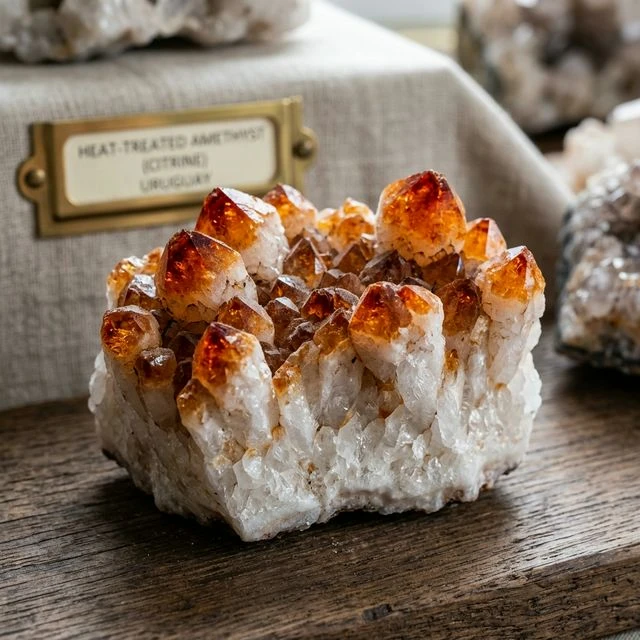
3. Dichroism and Clarity
Natural citrine is dichroic, meaning it can show slightly different shades of yellow when viewed from different angles under polarized light. Heat-treated amethyst is not. Furthermore, natural citrine is often "eye-clean" with fewer inclusions, whereas amethyst often contains "tiger stripe" inclusions that remain visible even after heating.
::: howto
How to Identify Natural Citrine: 4 Simple Tests
If you're out in the field or at a gem show, follow these steps:
- Check the tips: If the color is concentrated at the very tips of the crystals and the rest is white, it's heated amethyst.
- Look for "smokiness": Natural citrine often has a slight smoky undertone.
- Examine the price: Natural citrine is significantly more expensive. If a large cluster is priced at $20, it’s almost certainly treated.
- Use your smartphone: Modern technology can help you analyze crystal structures and color zoning in seconds.
:::
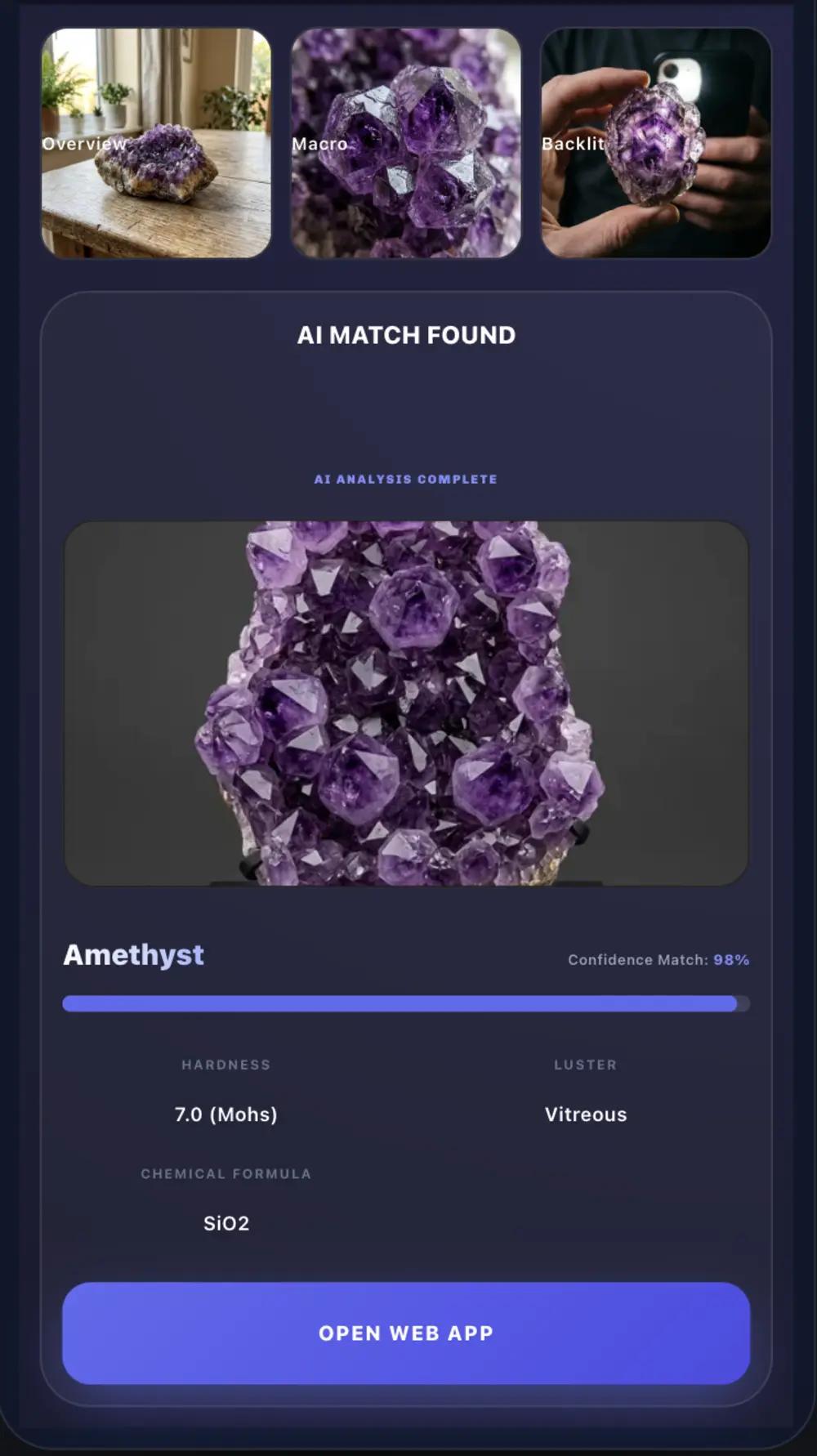
To accurately identify real citrine vs heat treated amethyst, we recommend using the Minerals guide mobile app. It provides high-resolution references and professional identification tips that you can use right on your phone.
Is Citrine Actually Heated Amethyst?
Technically, some natural citrine is amethyst that was heated by the earth's own geothermal energy millions of years ago. However, in the gem trade, "natural citrine" refers specifically to stones that came out of the ground yellow.
The main difference is the geologic time scale. Natural heating happens slowly over aeons, resulting in the stable, pale yellow color and dichroic properties. Lab heating happens in hours, leading to the brittle, "crumbly" texture often seen in treated clusters.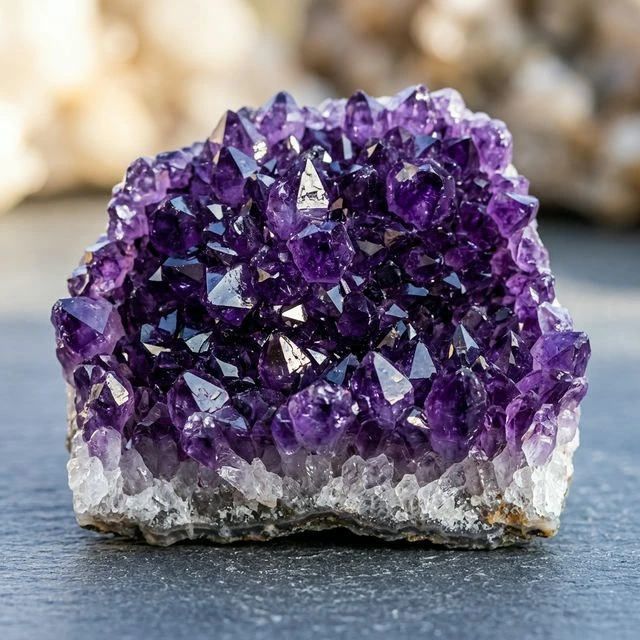
Price and Value Comparison
Because true citrine is one of the rarest varieties of quartz, it commands a premium. Natural citrine can cost 5-10 times more per carat than heat-treated amethyst.
When shopping, always ask for the origin. Most natural citrine comes from Brazil, Madagascar, or Russia. If the seller can't confirm it's "unheated," assume it's a treated amethyst—it’s still a beautiful stone, but you shouldn't pay citrine prices for it.
Expert Tip: If you see a citrine geode (a hollow rock filled with crystals), it is 99% likely to be heat-treated amethyst. Natural citrine does not typically grow in big, hollow geodes; it usually grows in individual points or smaller clusters.
See Also: More Gemstone Guides
Compare different minerals and learn identification secrets:
- Is Your Amethyst Real? – How to spot the purple quartz in its natural state.
- Topaz Identification Guide – Often confused with citrine, learn to tell them apart.
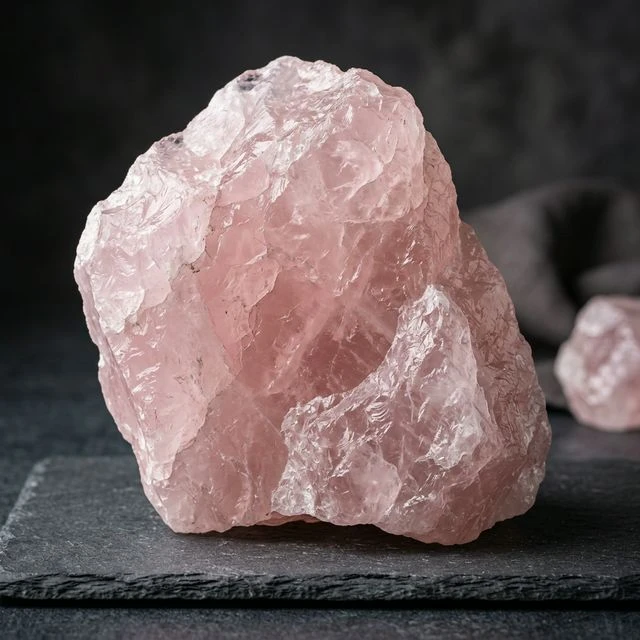
- Rose Quartz: Properties & Inclusions – Exploring the pink sister of amethyst and citrine.
- How to Identify Minerals (Master Guide) – Master our professional 3-photo workflow.
Available in other languages
- enReal Citrine vs. Heat-Treated Amethyst: How to Tell the Difference
- ru Цитрин или гретый аметист: как отличить натуральный камень
- es Citrino Natural vs. Amatista Tratada: Cómo Identificarlos
- fr Citrine Naturelle vs Améthyste Chauffée : Comment faire la différence
- de Echter Citrin vs. gebrannter Amethyst: So erkennen Sie den Unterschied
- it Citrino Naturale vs. Ametista Trattata: Come Riconoscerlo
- pt Citrino Natural vs. Ametista Tratada: Como Saber a Diferença
- pl Prawdziwy Cytryn a Wyżarzany Ametyst: Jak Rozpoznać Różnicę
- uk Цитрин чи Грітий Аметист: Як Відрізнити Натуральний Камінь
- tr Gerçek Sitrin vs. Isıl İşlem Görmüş Ametist: Fark Nasıl Anlaşılır
- sv Äkta Citrin vs. Bränd Ametist: Så ser du skillnaden
- no Ekte Citrin vs. Brent Ametyst: Slik ser du forskjellen
- hi प्राकृतिक सिट्रीन बनाम हीट-ट्रीटेड नीलम: अंतर कैसे पहचानें
- id Citrine Alami vs. Kecubung Bakar: Cara Membedakannya
Frequently Asked Questions
What is the basic difference between real (natural) citrine and heat-treated amethyst?
Both are varieties of quartz, but natural citrine forms with yellow-to-brownish colors in nature. Heat-treated amethyst is purple quartz that has been artificially heated to turn yellow/orange; chemically they are the same mineral but their origin (natural vs treated) differs.
How can I tell a natural citrine from a heat-treated amethyst by eye?
Look for color and zoning: natural citrine usually shows a softer, pale yellow to honey tone and relatively uniform color. Heat-treated amethyst often shows strong orange-brown or reddish tones, uneven color, or residual purple zones where the original amethyst color remains.
Can standard gem tests (refractive index, specific gravity) distinguish them?
No—both are quartz, so RI and SG are essentially identical. Distinguishing often requires careful visual inspection, gemological spectroscopy, or lab tests that detect trace-element or color-center differences.
What professional tests can confirm whether a stone is natural citrine or heat-treated amethyst?
Advanced methods include UV-Vis/infrared spectroscopy and trace-element analysis (e.g., using a gem lab) which identify the color-causing centers and heating signatures. A reputable gemological lab report is the most reliable way to confirm treatment or natural origin.
Should I pay less for heat-treated citrine and how should I buy?
Heat-treated stones are common and usually less expensive than rare natural citrine. Always ask the seller about treatment, request disclosure or a lab report for high-value stones, and buy from reputable dealers who label treatments transparently.