Ruby vs. Spinel: Expert Tips for Identifying Precious Red Gems
The history of red gemstones is a tale of mistaken identity that spans centuries, featuring kings, conquerors, and some of the world's most famous "rubies" that aren't rubies at all. The most legendary example is the "Black Prince's Ruby" in the British Imperial State Crown—a magnificent 170-carat crimson gem that modern gemologists have identified as a red spinel. For nearly a thousand years, these two stones were treated as the same, but today, distinguishing between them is a critical skill for any collector or enthusiast.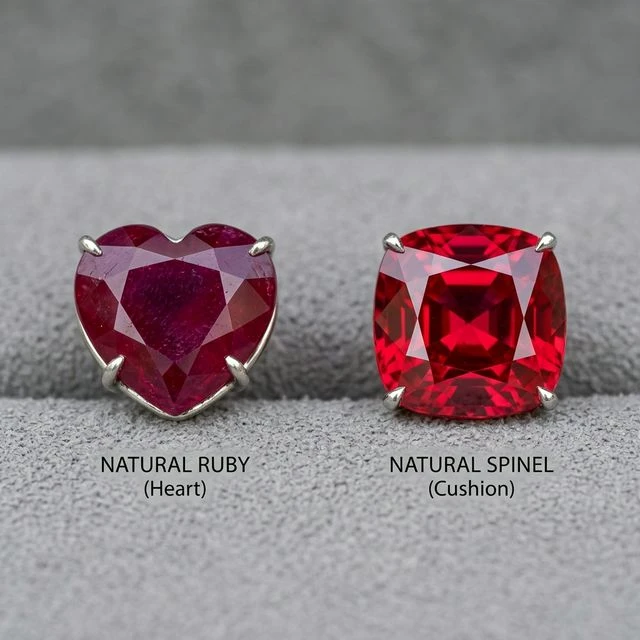
Identifying the difference between a ruby and a spinel requires more than just a keen eye for color. While they can look identical on the surface, their physical structures, optical properties, and internal worlds are fundamentally different.
The Physical Divide: Hardness and Crystal Systems
At the core of gemstone identification lies the mineral's physical properties. Rubies are a variety of the mineral corundum (aluminum oxide), while spinels are magnesium aluminum oxide. This difference in chemistry translates directly to their durability and crystal growth.
On the Mohs scale of hardness, ruby is the champion of red gems, sitting at a robust 9. It is second only to diamond in hardness, making it exceptionally resistant to scratches and ideal for daily-wear jewelry like engagement rings. Spinel, while still very durable, ranks at 8 on the Mohs scale. This marginal difference means that over decades of wear, a spinel might show slightly more "paper-wear" (tiny scratches on facet edges) than a ruby.
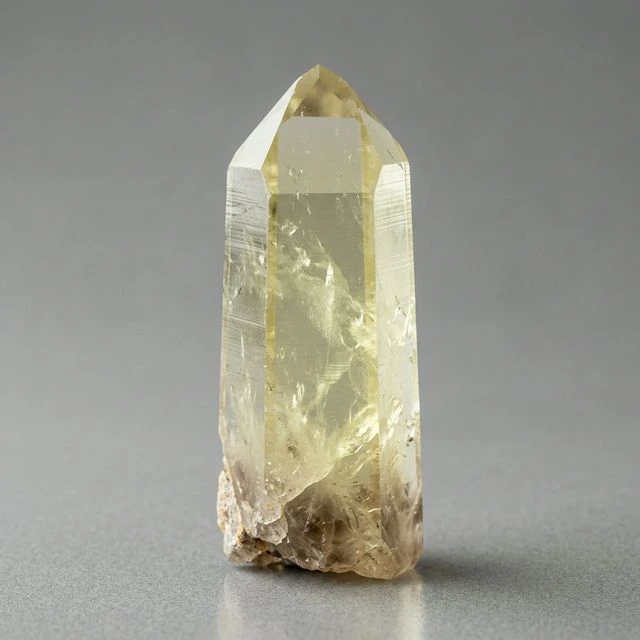
Their crystal systems also tell a story. Rubies belong to the trigonal system and often grow as six-sided prisms or tabular crystals. Spinels, being part of the cubic (isometric) system, typically form as octahedrons—two four-sided pyramids joined at the base. If you are examining a raw or rough specimen, the crystal shape is often the first and most reliable clue.
Optical Magic: Refraction and Dichroism
One of the most definitive ways to separate these two gems is through their reaction to light. Because rubies are trigonal, they are "doubly refractive." As light enters the stone, it splits into two rays, each traveling at a different speed. This results in a property called dichroism, where the gem can show two slightly different colors (e.g., purplish-red and orangey-red) depending on the angle of view.
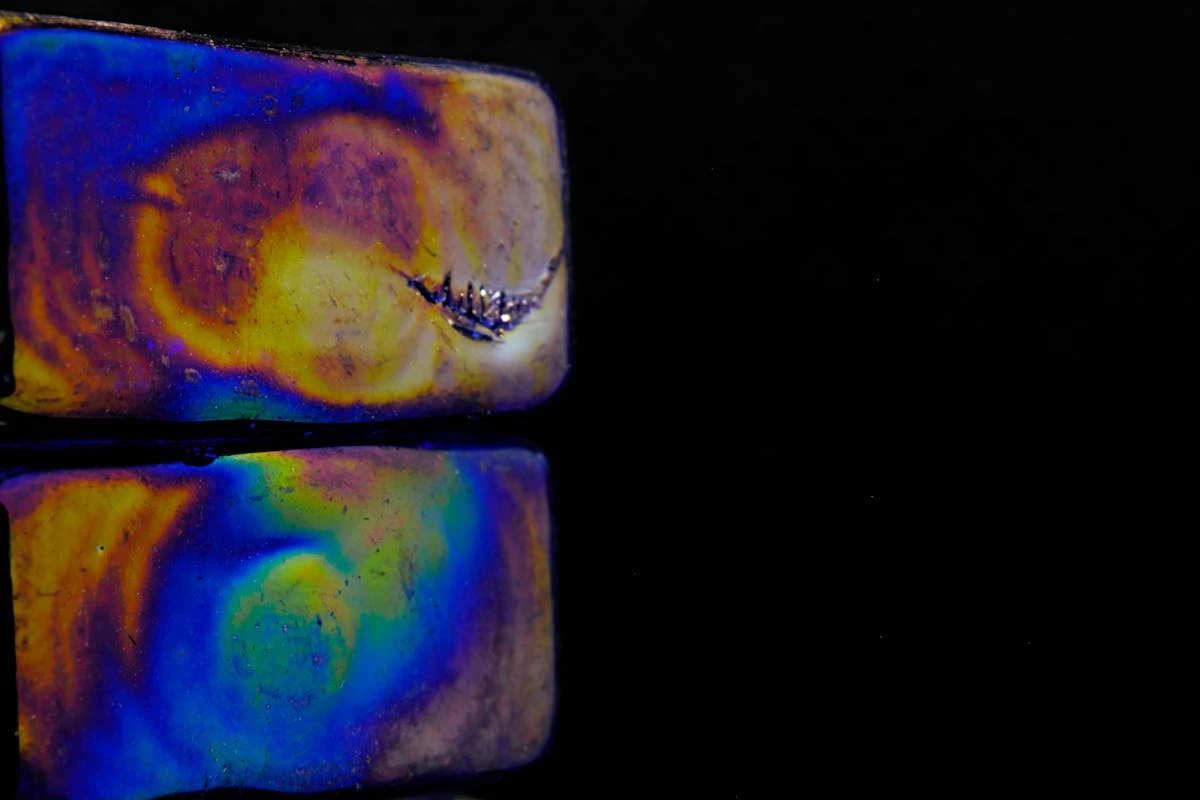
Spinels, however, are "singly refractive" due to their cubic structure. Light travels through them as a single ray, meaning they show the same color from every direction. To a trained eye using a polariscope or even a simple dichroscope, this optical signature is an instant giveaway.
Microscopic Secrets: Inclusion Analysis
When you look deep into the heart of these stones, you find their "birthmarks." Inclusions are the most fascinating and accurate way to identify a gemstone's origin and species.
Rubies almost always contain "silk"—fine, rutile needles that intersect at 60 and 120-degree angles. This silk gives many rubies a soft, glowing appearance and is responsible for the famous star effect (asterism) in star rubies. Spinels rarely have silk. Instead, their most diagnostic inclusions are tiny octahedral crystals (often of other spinels or magnetite) that look like a "night sky" of small, dark points or "milky" clouds.
If you want to identify ruby from spinel inclusions scanner apps are becoming invaluable tools.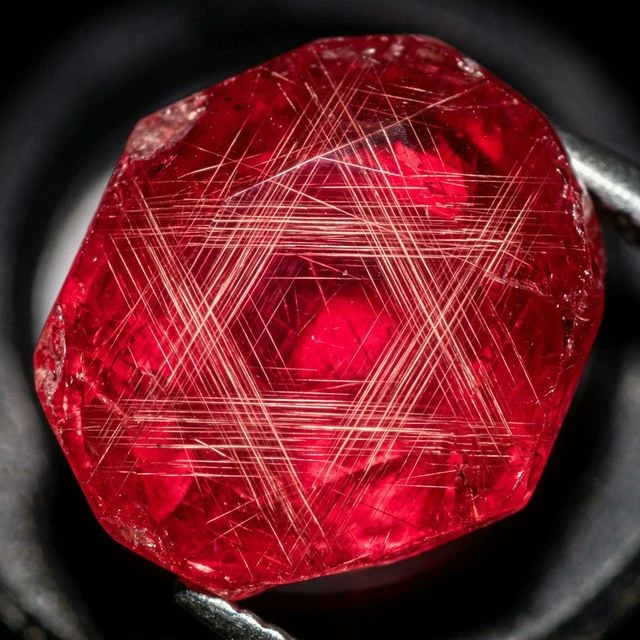
The Glow Factor: Fluorescence and Color
Both rubies and spinels owe their vibrant red color to the presence of chromium. Because of this shared chemistry, both can exhibit strong red fluorescence under ultraviolet light. When you step into the sun (which contains UV), this fluorescence makes the stone "glow" from within, intensifying the red.
Historically, Burmese rubies were prized for their intense fluorescence. However, many spinels (especially those from Mahenge or Vietnam) can exhibit an even more electric, neon-like glow. While color alone is never enough for a definitive ID, rubies often have a slightly more "velvety" or saturated look, whereas spinels are known for their exceptional clarity and "crisp" brilliance.
Distinguishing Red Gems from Purple Amethyst
While the ruby-spinel debate focuses on red, beginners sometimes confuse these stones with high-quality amethyst, especially when the amethyst has a deep, reddish-purple hue (often called "Siberian" color).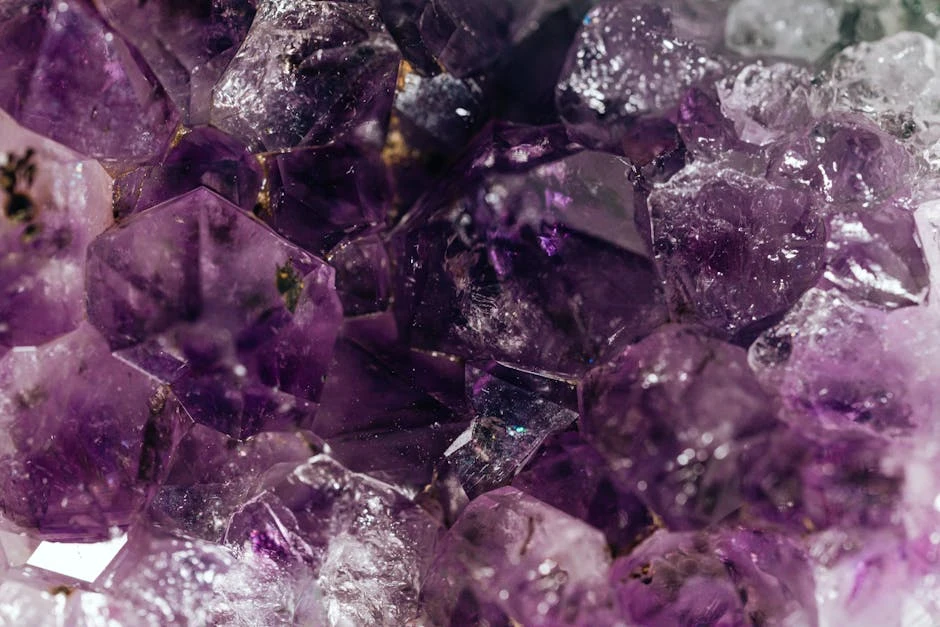
Amethyst is a variety of quartz (SiO2) with a hardness of only 7. It lacks the intense red flash of a ruby or spinel and will not show the same strong red fluorescence. Under a loupe, amethyst often shows "color zoning" (bands of different shades) and lacks the distinctive silk or octahedral inclusions found in its more precious red counterparts.
Price Comparison: Ruby vs. Spinel per Carat
From an investment standpoint, rubies generally command much higher prices, especially for untreated specimens over 3 carats. A top-tier "pigeon blood" ruby from Myanmar can reach astronomical prices at auction.
Spinel, however, offers incredible value. Because it was historically undervalued, you can often find a loupe-clean, 5-carat red spinel for a fraction of the price of a ruby of similar quality and size. As more collectors realize that spinel is actually rarer than ruby in some localities, its price is steadily climbing, making it a favorite for modern investors.
Whether you are a seasoned collector or a first-time buyer, understanding these gems ensures you appreciate the unique story each stone tells. With modern technology and a little gemological knowledge, the days of confusing a royal spinel for a ruby are long gone.
See Also: More Gemstone Guides
Compare different minerals and learn identification secrets:
- Sapphire Authenticity Test – Spotting the difference in blue corundum.
- Emerald Clarity & Inclusions – Identifying the green treasures.
- Tourmaline Color Identification – The rainbow gemstone's unique features.
- How to Identify Minerals (Master Guide) – Master our professional 3-photo workflow.
Available in other languages
- enRuby vs. Spinel: Expert Tips for Identifying Precious Red Gems
- ru Рубин против шпинели: экспертные советы по определению красных драгоценных камней
- es Rubí vs. Espinela: Consejos de expertos para identificar gemas rojas
- fr Rubis vs. Spinelle : Conseils d'experts pour identifier les gemmes rouges
- de Rubin vs. Spinell: Expertentipps zur Identifizierung roter Edelsteine
- it Rubino vs. Spinello: Consigli esperti per identificare le gemme rosse
- pt Rubi vs. Espinela: Dicas de especialistas para identificar gemas vermelhas
- pl Rubin vs. Spinel: Eksperckie porady dotyczące identyfikacji czerwonych kamieni
- uk Рубін проти Шпінелі: Поради експертів з ідентифікації червоних каменів
- tr Yakut vs. Spinel: Kırmızı Değerli Taşları Tanımlamak İçin Uzman İpuçları
- sv Rubin vs. Spinell: Experttips för att identifiera röda ädelstenar
- no Rubin vs. Spinell: Eksperttips for identifisering av røde edelstener
- hi माणिक बनाम स्पिनल: लाल रत्नों की पहचान के लिए विशेषज्ञ युक्तियाँ
- id Rubi vs. Spinel: Panduan Ahli untuk Mengidentifikasi Permata Merah
Frequently Asked Questions
What are the quickest visual clues to distinguish ruby from spinel?
Ruby (corundum) often shows a deeper, velvety red with color zoning and "silk" that softens light, while spinel tends to be more transparent, vivid or "electric" red and usually lacks the velvety appearance; crystal habit also differs—ruby forms hexagonal/prismatic crystals, spinel forms octahedral crystals.
What inclusions or internal features point to ruby versus spinel?
Ruby commonly contains rutile needle "silk", mineral crystals, and fingerprint-type healed fractures; natural spinel often shows octahedral crystal remnants or granular texture, and synthetic spinel frequently shows curved growth lines and gas bubbles.
Which simple gemological tests reliably separate them?
Measure refractive index (ruby ~1.762–1.770, spinel ~1.718) and specific gravity (ruby ~4.00, spinel ~3.58); ruby is birefringent (shows anomalous double refraction/dichroism) and will behave anisotropically under a polariscope, while spinel is isotropic and remains dark under crossed polars.
Can UV fluorescence or spectroscopy help identify them?
Yes—ruby commonly fluoresces strong red under longwave UV because of chromium, and its absorption lines (distinct Cr bands) appear on a spectroscope; spinel fluorescence is variable and its spectrum lacks the same chromium signature, so combined UV and spectroscope readings are diagnostic.
If I have an expensive red gem, should I try to ID it myself or send it to a lab?
Basic tools (10× loupe, dichroscope, refractometer, polariscope, UV light, microscope) let a trained jeweler make a confident ID, but for high-value stones, treatments, or uncertain results, obtain a professional gemological lab report for definitive identification.