Opal Types and Patterns: Identifying Play-of-Color in Natural Gems
When you hold a high-quality opal in your hand, you aren't just looking at a stone; you’re witnessing a natural light show that has fascinated humanity for millennia. Unlike other gemstones that derive their beauty from a single, static color, the opal is defined by its "play-of-color"—a dancing kaleidoscope of spectral hues that shift and change as the light hits the stone from different angles.
To truly appreciate and value an opal, you must understand its pattern. Gemologists use specific terms to describe the arrangement of color flashes. In this guide, we break down the most iconic opal patterns using schematic diagrams alongside real-world examples to help you master pattern recognition.
What is Play-of-Color?
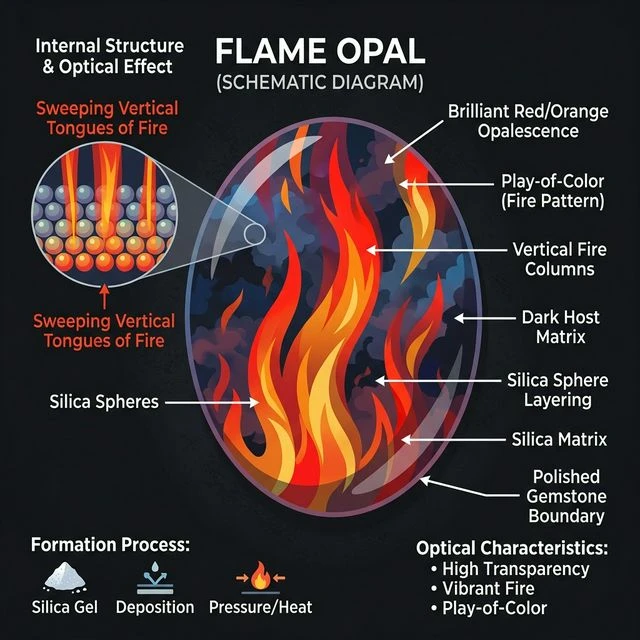
Opals are composed of millions of tiny silica spheres. In "precious" opal, these spheres are uniform in size and arranged in a perfect grid. When light passes through, it diffracts into the colors of the rainbow. The arrangement of these silica structures creates the distinct patterns we see on the surface.
Iconic Opal Patterns: Schematic vs. Real
1. Harlequin Pattern
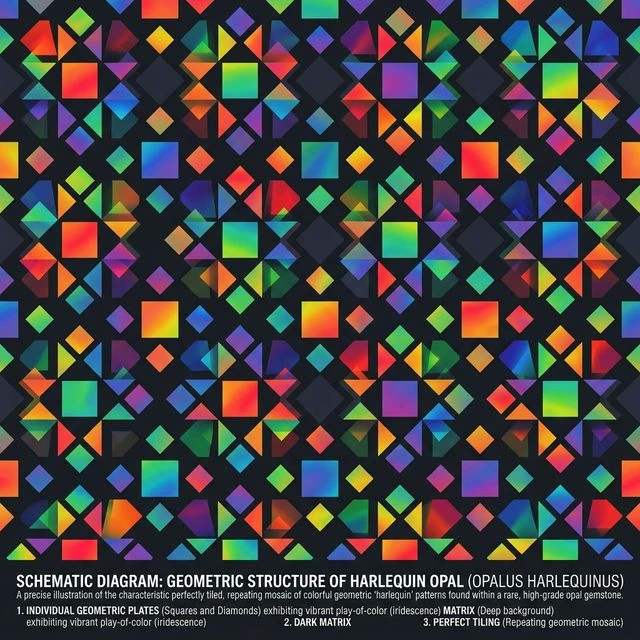
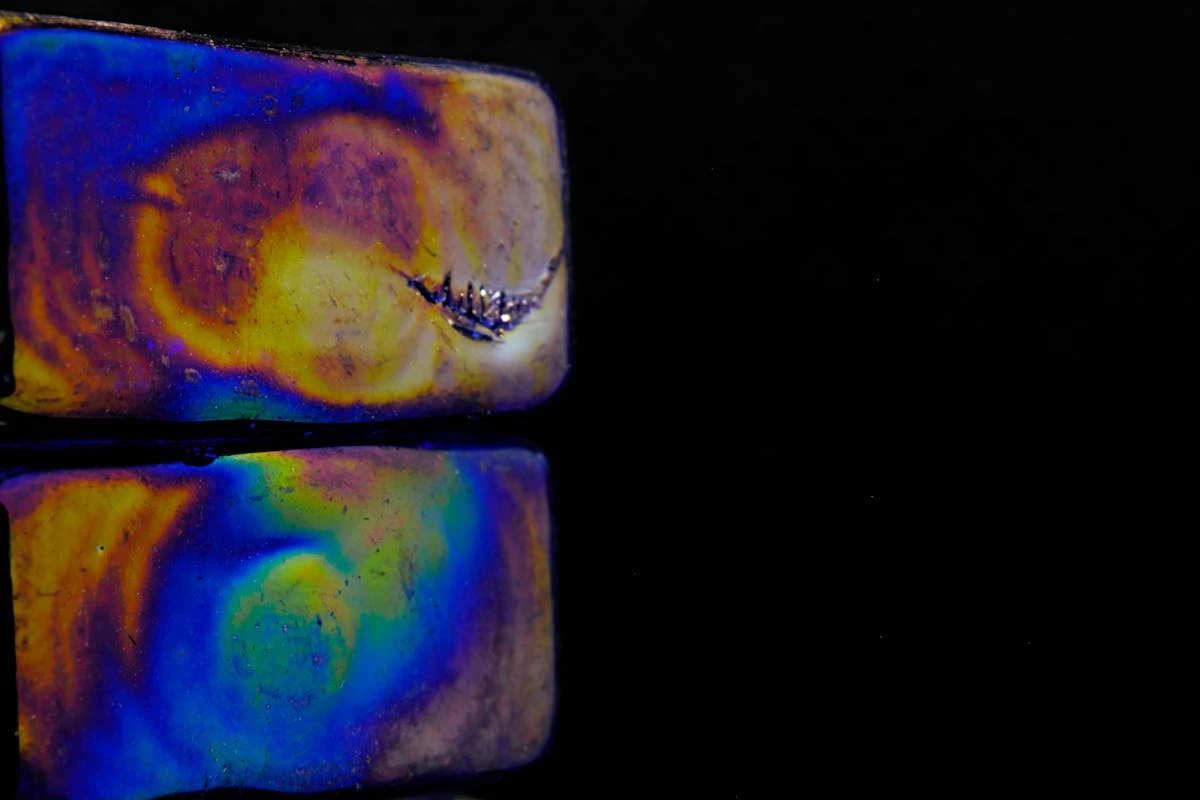
The "Harlequin" is the rarest and most valuable opal pattern. It consists of large, distinct, angular patches of color that are roughly square or diamond-shaped, resembling a checkerboard.
2. Pinfire Pattern
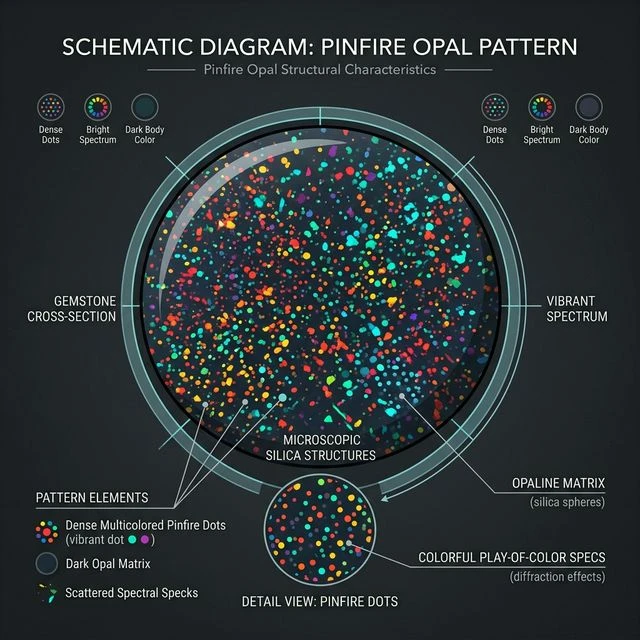
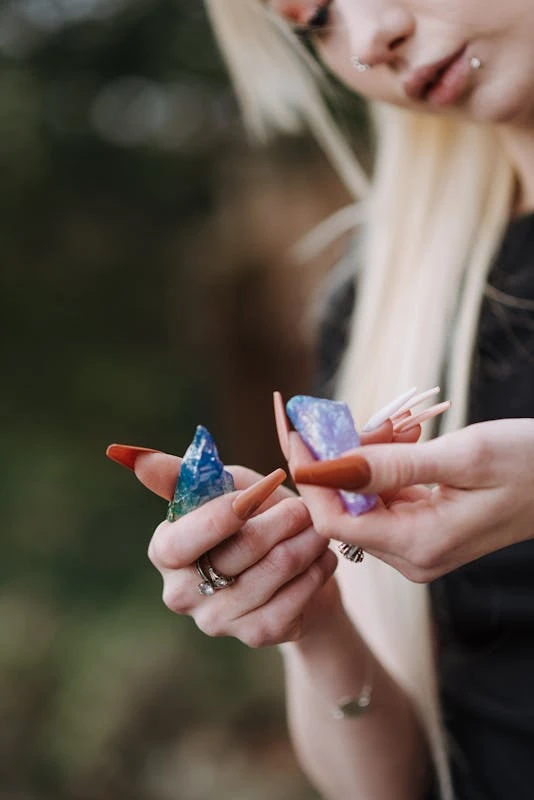
Pinfire is characterized by very small, pin-sized specks of color spread closely together throughout the stone. It is a subtle but beautiful pattern often found in crystal and white opals.
3. Flame Pattern
This pattern looks like licking tongues of fire or sweeping red streaks that dance across the surface as the stone is tilted. It is highly sought after for its dynamic movement.
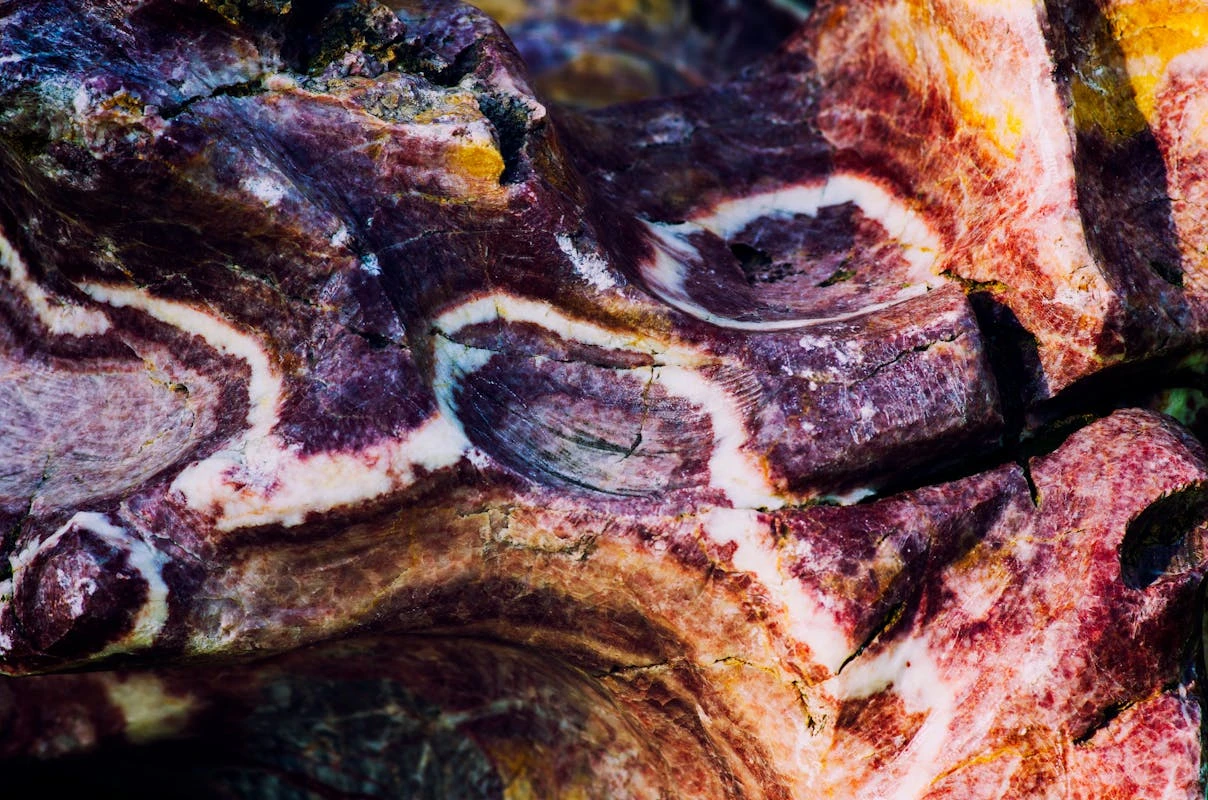
4. Chinese Writing
In this unique pattern, the flashes of color overlap in narrow strips that resemble traditional calligraphy characters or brush strokes.

Identifying Natural vs. Synthetic Patterns
With the rise of lab-grown stones like Gilson synthetic opal, pattern recognition is a critical skill. Synthetic opals often have a "lizard skin" or "honeycomb" pattern that looks too perfect and uniform when viewed under magnification.
Natural opal patterns are organic and have:
- Variegated edges: The patches of color shouldn't have perfectly straight, mechanical borders.
- Depth: The play-of-color should appear to come from within the stone, not just sit on the surface.
If you are a collector or a jeweler, using a specialized tool can help. For those serious about mineralogy, you can use the opal play of color pattern recognition features in our mobile application to differentiate between natural gems and lab-grown imitations.
Black Opal vs. White Opal Patterns
The background (or body) color of the stone significantly impacts how the pattern is perceived.
- Black Opals: Found primarily in Lightning Ridge, Australia, these have a dark body tone which makes the play-of-color pop with intense brilliance.
- White/Light Opals: These have a pale or milky background. The patterns are softer and more pastel-like.
- Boulder Opals: These form within ironstone boulders. The pattern often weaves through the host rock, creating a "matrix" effect.
The Rarity and Value of Unique Opal Patterns
Not all color play is created equal. A "Broad Flash" pattern—where a large section of the stone changes color all at once—is usually more valuable than a "Pinfire" pattern of the same color. However, the ultimate value is determined by:
- Brightness: A scale from 1 to 5.
- Dominant Color: Red is most expensive, followed by orange, yellow, green, and blue.
- Pattern Rarity: Harlequin is the most expensive, followed by Flagstone and Ribbon.
Whether you’re hunting for a rough stone in the Australian outback or browsing a high-end jewelry store, understanding these patterns will ensure you appreciate the true artistry of nature.
See Also: More Gemstone Guides
Explore other unique mineral structures and identification tips:
- Emerald Clarity & Inclusions – Identifying internal patterns in green beryl.
- Tourmaline Colors & Identification – The rainbow gemstone's unique zoning.
- Agate Identification Tips – Recognizing the banded patterns of chalcedony.
- How to Identify Minerals (Master Guide) – Learn our professional 3-photo identification method.
Available in other languages
- enOpal Types and Patterns: Identifying Play-of-Color in Natural Gems
- ru Типы и паттерны опалов: как определить игру цвета
- es Tipos y patrones de ópalo: Identificar el juego de colores
- fr Types et motifs d'opale : identifier le jeu de couleurs
- de Opaltypen und -muster: Das Farbspiel erkennen
- it Tipi e motivi di opale: Identificare il gioco di colori
- pt Tipos e padrões de opala: Identificar o jogo de cores
- pl Rodzaje i wzory opali: Rozpoznawanie gry barw
- uk Типи та патерни опалів: розпізнавання гри кольору
- tr Opal Türleri ve Desenleri: Renk Oyununu Tanıma
- sv Opaltyper och mönster: Identifiera färgspel
- no Opaltyper og mønstre: Gjenkjenne fargespill
- hi ओपल के प्रकार और पैटर्न: रंगों के खेल की पहचान
- id Jenis dan Pola Opal: Mengenali Permainan Warna
Frequently Asked Questions
What is "play-of-color" and how can I recognize it in natural opal?
Play-of-color is the shifting, spectral flashes seen in precious opal caused by diffraction of light from ordered silica spheres in the stone. It appears as bright, often patchy or flashing spectral colors that change with viewing angle, unlike surface iridescence from coatings which stays fixed.
Which opal types show play-of-color and which don’t?
Precious opal (white, crystal, black) and many boulder opals show genuine play-of-color. Common opal and most transparent fire opal usually lack it. Black opal and crystal opal often display the strongest contrast; boulder opal’s color is set against ironstone matrix.
What are the named play-of-color patterns and why do they matter?
Pattern names (pinfire, harlequin, broadflash, rolling flash, flame, ribbon, mosaic) describe the arrangement and scale of color patches. Patterns affect appearance and value—harlequin (large, regular squares) and broadflash (large sweeping color) are typically more desirable than tiny pinfire.
How can I tell natural play-of-color from synthetics, doublets or triplets?
Under 10–30× magnification look for: natural internal structure (random potch and inclusions) and lack of glue lines; doublets/triplets show a distinct layered junction or dark backing and a domed cap. Synthetics may show overly regular "snakeskin" or columnar growth and uniform color. When unsure, request gem lab testing (Raman, spectroscopy, RI/SG) or a certificate.
How should I view and photograph play-of-color to assess it reliably?
Use bright, diffuse daylight or a neutral LED and tilt the stone to see color change. Dark backgrounds increase contrast for lighter opals; avoid overly direct spotlighting that washes out pattern. For photos, use macro focus, tripod, small aperture and capture several angles to show shifting color.