Spot the Fake: A Collector's Guide to Real Malachite vs. Imitations
Malachite is one of the most mesmerizing minerals in the world, with its deep green swirls and organic banding. However, its popularity makes it a prime target for sellers of cheap imitations. Whether you're browsing a gem show or shopping online, knowing how to protect your investment and distinguish genuine copper carbonate from plastic, glass, or clay "fakes" is an essential skill.
In this expert guide, we’ll break down the visual DNA that defines authentic malachite and provide actionable tests to ensure you never pay stone prices for plastic.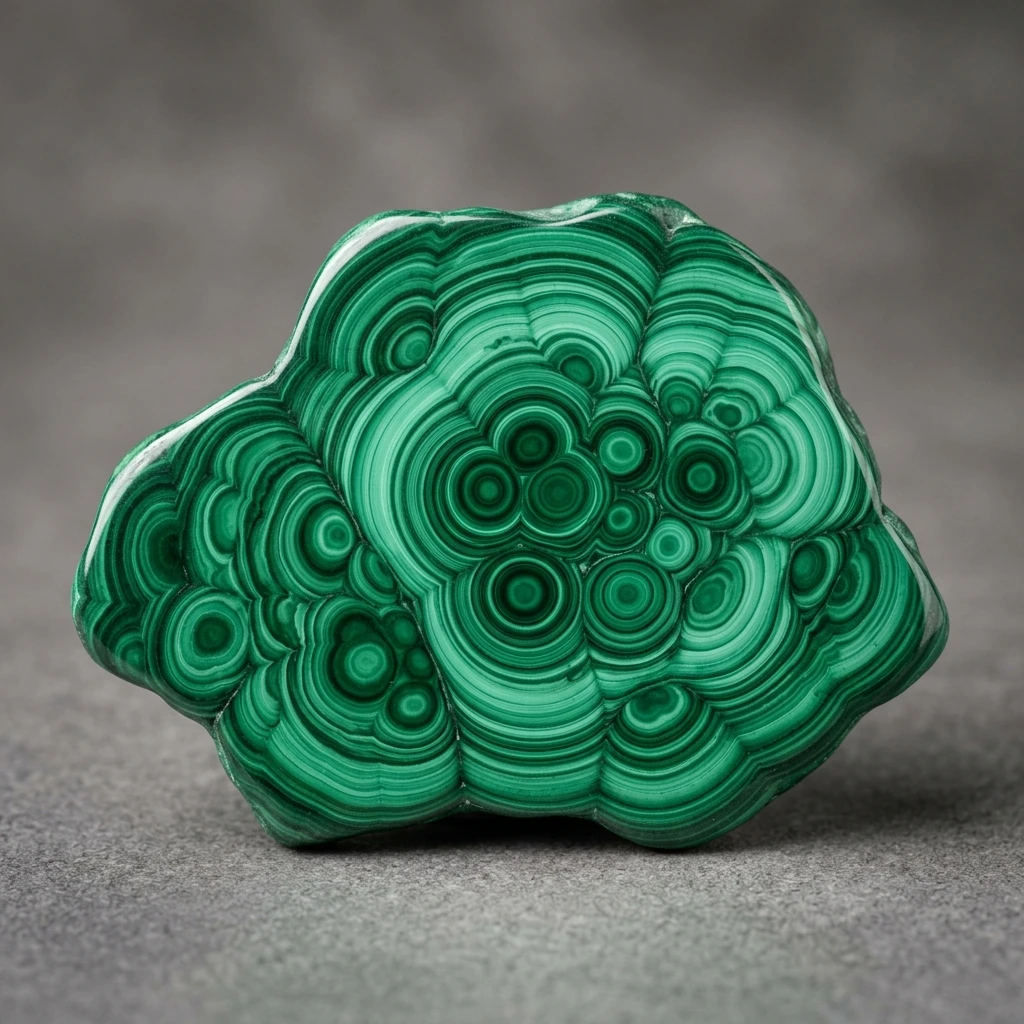
1. The Visual DNA: Organic Bands or Robotic Lines?
The most iconic feature of malachite is its banding. In nature, malachite forms through the slow precipitation of copper-rich fluids, resulting in organic, wavy, and non-repeating patterns.
The Real Texture: Imperfectly Perfect
Natural malachite features concentric circles (often called "eyes"), swirling ribbons, and delicate botryoidal structures. These patterns are never perfectly symmetrical or repeating. If you look closely, you'll see infinite variations in band thickness and depth.
The Trust Signal: Look for Azurite
In nature, malachite is often born alongside Azurite, a deep blue copper mineral. If you see tiny specks or patches of vibrant blue integrated into the green patterns, you are likely looking at the real thing. Counterfeiters rarely attempt to mimic these complex mineral intergrowths.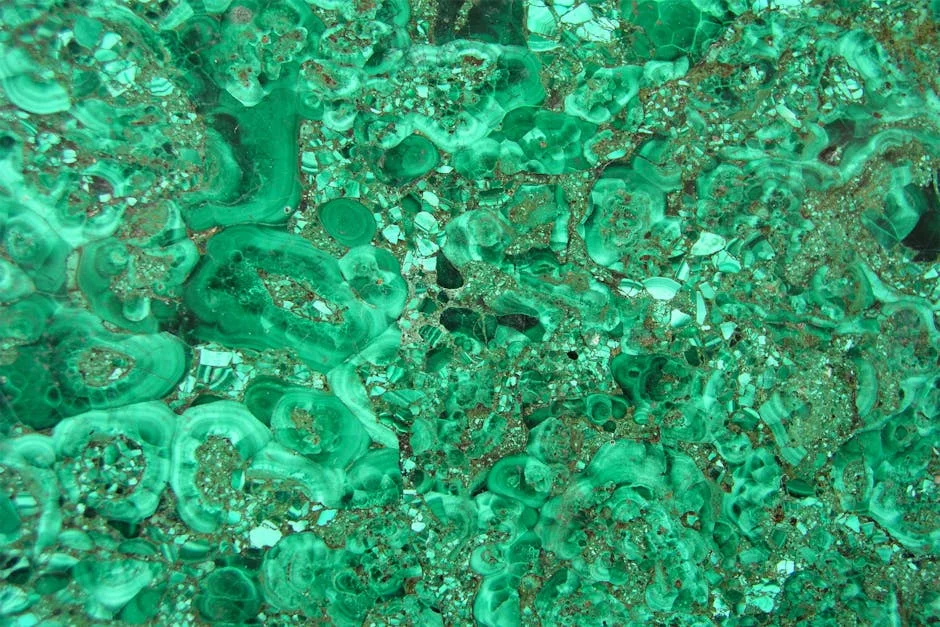
The Red Flags of Fakes
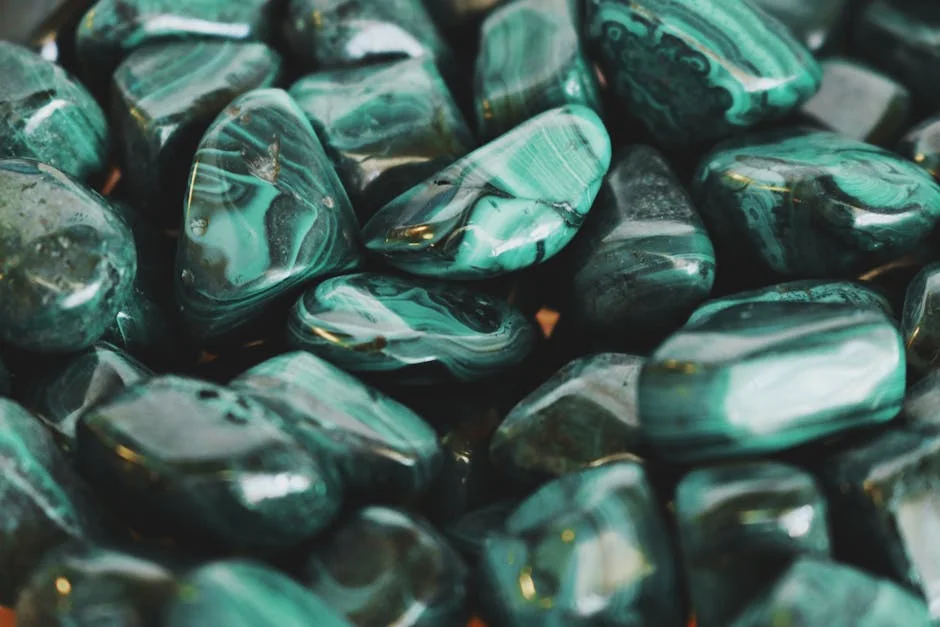
Fake malachite (often made of clay, resin, or plastic) typically displays very rigid, uniform, and repetitive lines. Counterfeiters often use solid black lines to separate the green bands. In genuine malachite, you will almost never see pure black; instead, you'll see extremely dark forest green.
2. Palette Perfection: A Spectrum of Green vs. Neon Fakes
Genuine malachite is a single-mineral species, but it displays a rich spectrum of greens—from pale, minty shades to deep, velvety shadows.
- Real: The transitions between colors are subtle and "melt" into each other. Even in high-contrast specimens, the colors feel like they belong to the same family.
- Fake: Imitations often look "too bright" or use neon greens. The contrast between bands is harsh and abrupt, looking more like layers of different colored clay than a natural mineral growth.
3. The "Cool Touch" vs. The "Plastic Warmth"
Malachite is a natural stone with high thermal conductivity. This provides one of the simplest tests you can perform right at a vendor's table.
The Test: Touch the specimen to your cheek or the tip of your nose.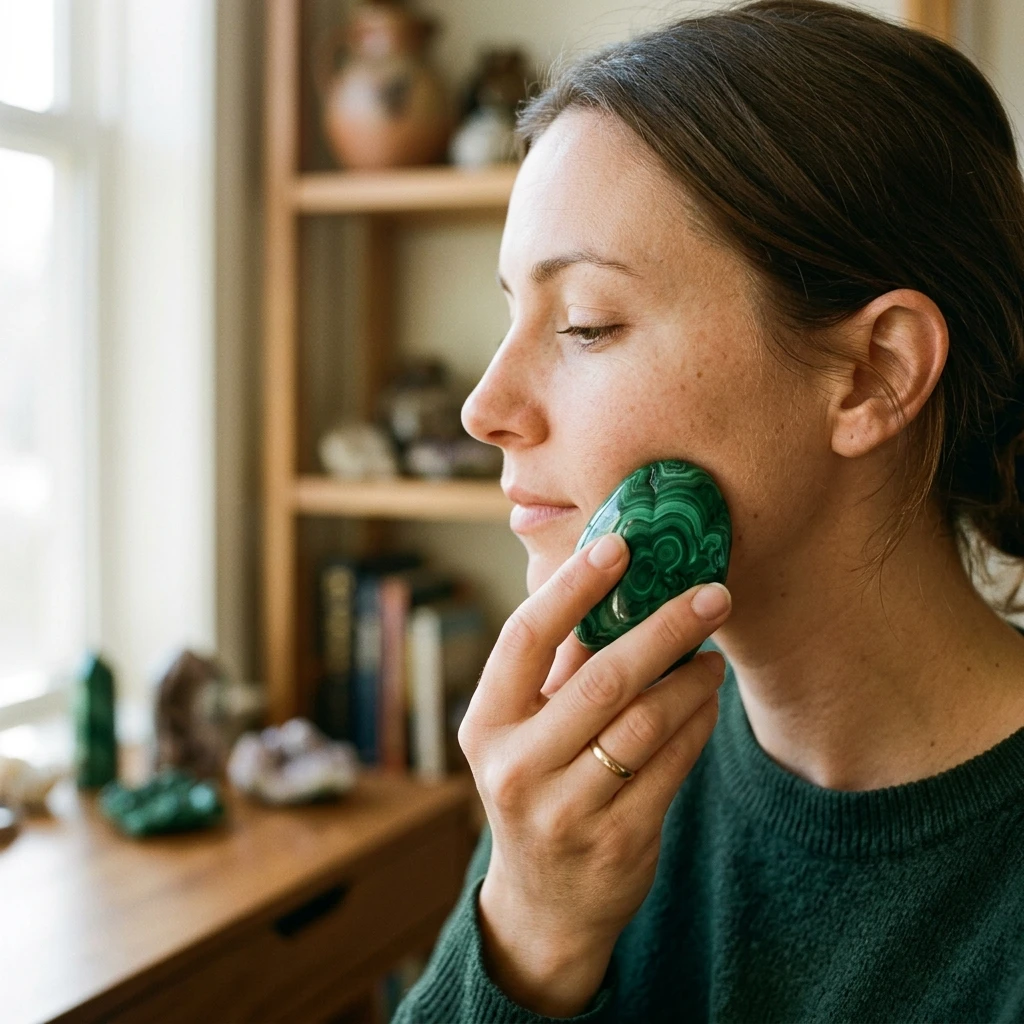
- Genuine Stone: Real malachite will feel notably cold, like a piece of glass or marble. It will take a few moments to warm up to your skin temperature.
- Imitations (Plastic/Resin): These materials are thermal insulators. They will feel relatively "room temperature" or even slightly warm, and they will adjust to your body heat almost instantly.
4. Weight and Density: The Copper Factor
Because malachite is more than 50% copper by weight, it is surprisingly heavy. This "heft" is the hardest thing for counterfeiters to replicate using lightweight polymers.
- Real: A genuine malachite bead or cabochon will feel significant and "dense" in your palm (Specific Gravity: 3.6–4.0).
- Fake: Plastic and resin fakes feel unnaturally light (S.G. ~1.2). If a large specimen feels "airy," it’s most likely a imitation.
Watch Out for "Malachite Glass"
Green glass with swirls (often from China) can mimic the weight of real malachite. To spot it, look for tiny air bubbles near the surface under a magnifying glass. Natural malachite never contains gas bubbles.
5. The Hot Needle Test (For Plastic Destructive)
If you are still unsure and the item is yours, you can use the hot needle test.
- The Method: Heat a needle until it's red hot and touch it to an inconspicuous spot (like inside a bead hole).
- The Result: If it sinks in and smells like burnt plastic, it's an imitation. Genuine malachite will not melt and will not produce a chemical smell.
6. The "Reconstituted" Trap
"Reconstituted" malachite is a tricky middle ground. It's made by mixing real malachite dust with epoxy resin.
- Is it real? Technically it contains stone, but it's a synthetic composite, not a natural gemstone.
- How to spot it: It often has a "chalky" or matte appearance where the resin is visible. It will feel lighter than solid malachite and warmer to the touch.
A Note on Armani Prive Malachite
If you are searching for Rouge Malachite or Vert Malachite, keep in mind these are luxury perfumes by Giorgio Armani. While their bottles are designed to look like the stone, "real vs. fake" discussions in that community refer to the fragrance authenticity, not the mineral. If you are buying the perfume, always check the batch code and glass finishing!
🏆 The Final Verdict: The Golden Rules
If you're still in doubt, remember the three non-negotiables of genuine natural malachite:
- Weight: It must feel surprisingly heavy (like a piece of copper).
- Temperature: It must feel stone-cold against your skin.
- Patterns: Look for wavy, organic bands. If you see perfect repetition or solid black lines, it's a fake.
Authentic malachite is a masterpiece of mineral growth—don't settle for plastic imitations when you can own the real thing.
Don't let a "too good to be true" price tag fool you. A large, perfectly patterned piece at a fraction of the market rate is almost certainly an imitation. Before you buy, use our real-time interactive checklist below to verify your specimen right at the vendor's table.
Available in other languages
- enIs Your Malachite Real? How to Spot Fake vs. Genuine Stone
- ru Ваш малахит настоящий? Как отличить имитацию от природного камня
- es ¿Su Malaquita es Real? Cómo Distinguir la Piedra Natural
- fr Votre Malachite est-elle Vraie ? Comment Repérer les Contrefaçons
- de Echter Malachit oder Fälschung? So erkennen Sie das Original
- it La tua Malachite è Vera? Come Riconoscere le Imitazioni
- pt Sua Malaquita é Real? Como Identificar a Pedra Autêntica
- pl Czy Twój malachit jest prawdziwy? Jak rozpoznać imitację
- uk Ваш малахіт справжній? Як відрізнити природний камінь від підробки
- tr Malakit Taşınız Gerçek mi? Sahte ve Doğal Ayrımı
- sv Är din malakit äkta? Så känner du igen natursten
- no Er malakitten din ekte? Slik skiller du naturstein fra fakes
- hi क्या आपका मैलाकाइट असली है? असली बनाम नकली की पहचान
- id Apakah Malasit Anda Asli? Cara Membedakan Batu Alam dan Palsu
Frequently Asked Questions
How can I tell real malachite from an imitation just by looking?
Real malachite shows irregular, banded concentric rings and wavy light/dark green layers. A key trust signal is the presence of **Azurite** (tiny blue specks), which is extremely hard to fake. Uniform color, identical repeating swirls, or neon green are red flags for imitations.
What common materials are sold as "malachite" and how do I spot them?
Plastic, resin, and **Malachite Glass** are common imitations. Plastic/resin feels warm and lightweight, while glass mimics the weight but contains tiny air bubbles visible under magnification. Real malachite is dense (copper-rich) and feels cold.
What safe, non-destructive tests can I do at home?
Use a 10x loupe to inspect banding, look at drill holes for white or resin-filled cores, compare heft (malachite is relatively heavy, SG ≈3.6–4), feel the stone (real malachite is cool to the touch), and dab a cotton swab with acetone in an inconspicuous spot to see if dye bleeds. Avoid aggressive scratch or heat tests on valuable items.
How can I recognize reconstituted or stabilized malachite?
Reconstituted malachite is made from powdered malachite plus resin; it often shows air bubbles, glossy resin-like shine, identical repeat patterns, visible glue seams or resin at edges/drill holes, and a slightly lighter weight compared with solid natural malachite. Sellers should disclose stabilization—if not disclosed, be cautious.
Is real malachite expensive?
Malachite is a standalone semi-precious stone with a moderate price range. It's more expensive than plastics or quartz, but significantly cheaper than emeralds or sapphires. Value depends on banding quality (silky vs. matte), size, and craftsmanship. Very low prices for large, perfectly-patterned pieces should raise suspicion.
What should I ask or request when buying malachite to avoid fakes?
Ask the seller to confirm origin and treatments, request high-resolution photos (including drill holes and reverse), ask for return policy and any gemological report for high-value pieces. If the price seems too low for a large, well-patterned piece, it’s likely treated or imitation.