Turquoise Authenticity Test: Is Your Gemstone Real?
Turquoise is one of the most beloved gemstones in history, prized by civilizations from the Aztecs to the Egyptians. However, its popularity makes it a prime target for counterfeiters. Today, the market is flooded with convincing imitations—most notably dyed howlite and magnesite.
If you've recently purchased a turquoise piece and are questioning its origins, this guide and our interactive diagnostic tool below will help you separate the treasures from the fakes.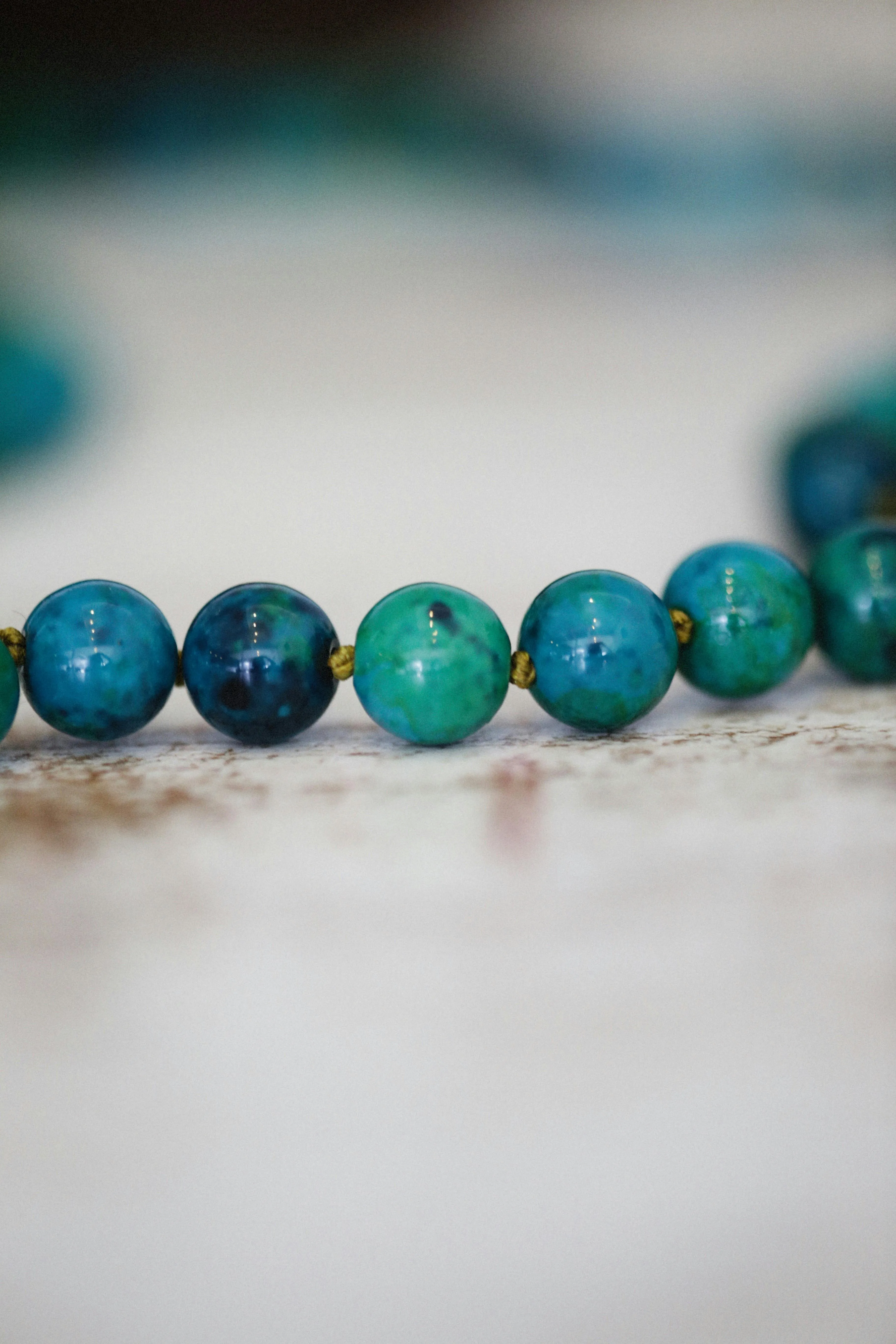
The Great Pretenders: Dyed Howlite and Magnesite
Most "fake" turquoise isn't glass or plastic; it's a real mineral that has been artificially altered.
- Howlite: Naturally white with grey or black veining. It is extremely porous, making it the perfect "sponge" for blue and green dyes.
- Magnesite: Similar to howlite, magnesite is a white carbonate mineral that takes dye exceptionally well.
Both minerals are significantly cheaper than genuine turquoise. When dyed, they can mimic the appearance of "Sleeping Beauty" or "Kingman" turquoise so well that even experienced collectors can be fooled at a glance.
Visual Clues: Color and Matrix Inspection
Before performing any destructive tests, start with a careful visual examination.
Color Uniformity
Natural turquoise is rarely a perfectly uniform shade. It typically features subtle variations in hue—small patches of lighter or darker blue/green. If your stone looks "too perfect," with a flat, saturated color that shows no variation even under a magnifying glass, it's a strong indicator of a dyed imitation.
The Matrix (Veining)
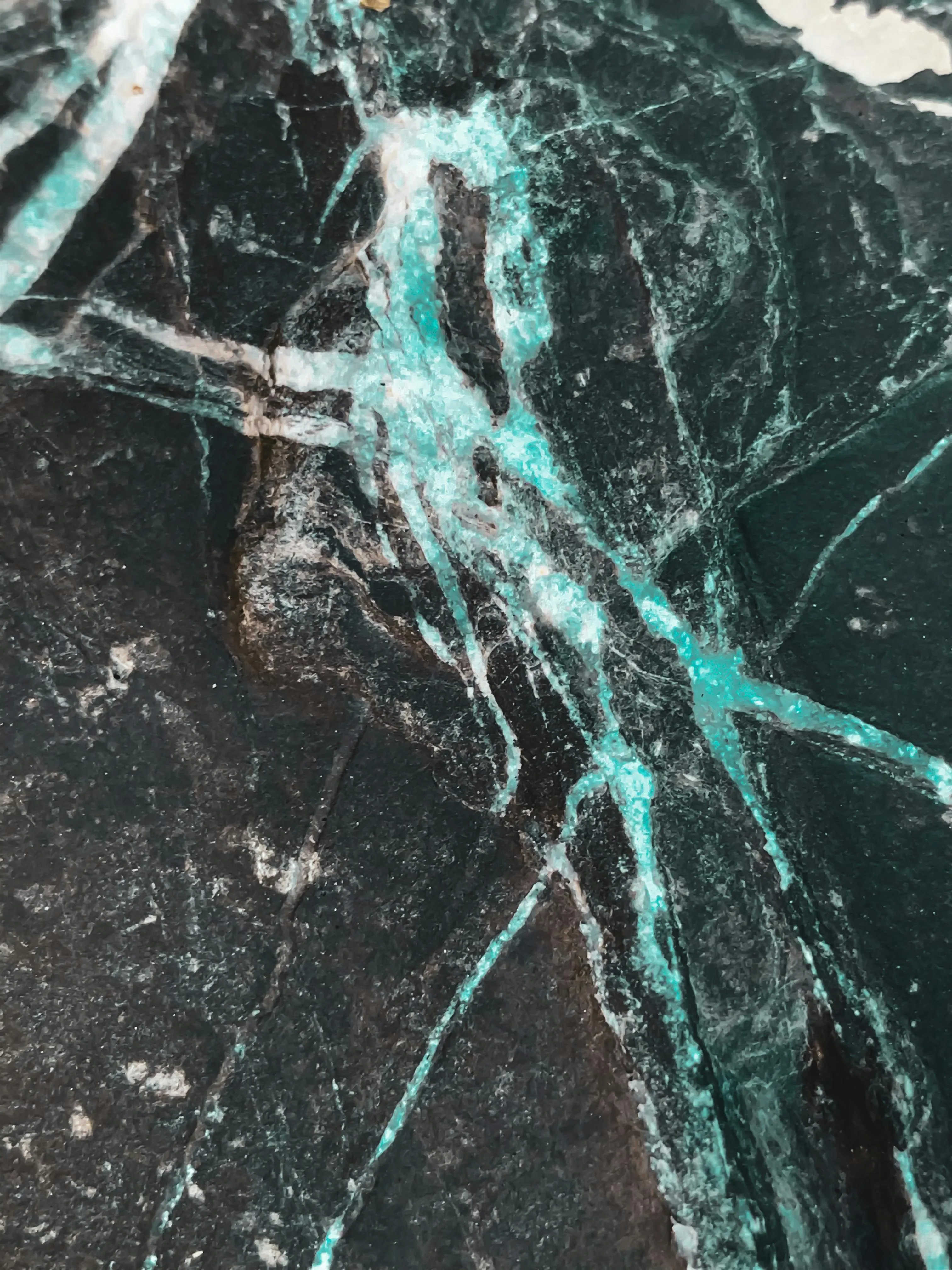
The dark spiderweb-like veins in turquoise are known as the matrix.
- In Real Turquoise: The matrix often consists of mineral remnants from the host rock (like pyrite or limonite). If you run your fingernail over the veins, you might feel a slight "groove" or indentation where the matrix meets the turquoise.
- In Fakes: On low-quality imitations, the matrix is often painted on the surface. These veins will feel perfectly smooth. In dyed howlite, the natural grey veins are already there, but the dye doesn't always penetrate them perfectly, sometimes leaving white "halos" around the veining.
The Acetone Test: Detecting Surface Dyes
[!WARNING] This is a destructive test. Acetone can remove "stabilization" resins or surface treatments even on real turquoise. Only perform this on an inconspicuous area, such as the back of a pendant or the edge of a bead.
The Acetone test is the most definitive way to identify a dyed stone at home.
- Dampen a cotton swab with pure acetone (or professional-grade nail polish remover).
- Gently rub a small, hidden spot on the stone for 10–20 seconds.
- If blue or green color transfers to the swab, the stone is a dyed fake. Genuine turquoise color is part of the mineral structure and will not rub off.
The Scratch Test: Assessing Hardness
Mineral hardness is measured on the Mohs scale.
- Turquoise: 5 to 6 (about the same as a window glass or a high-quality steel blade).
- Howlite/Magnesite: 3.5 to 4.5 (significantly softer).
If you can easily scratch the surface of the stone with a standard steel pocketknife, it is likely howlite or magnesite. Genuine turquoise should resist a steel blade or require significant pressure to mark.
Porosity and the "Drill Hole" Check
If your turquoise is in the form of beads, check the inside of the drill hole. This is one of the easiest ways to spot a fake without damaging the visible surface. Because dye often fails to penetrate the very center of a stone, the inside of the hole in a dyed howlite bead will often reveal its natural white color. If the blue color goes all the way through, it’s a better sign (though some fakes are "pressure dyed" to go deep).
Professional Verification vs. Home Testing
While home tests are useful, they aren't 100% conclusive. "Stabilized" turquoise—natural turquoise treated with clear epoxy for durability—is a standard industry practice and is technically "real" turquoise, even though it has been modified.
If you have a high-value piece or a family heirloom, the only way to be certain is to have it appraised by a certified gemologist who can use spectroscopic analysis to confirm the mineral's crystalline structure.
Interactive Identification Wizard
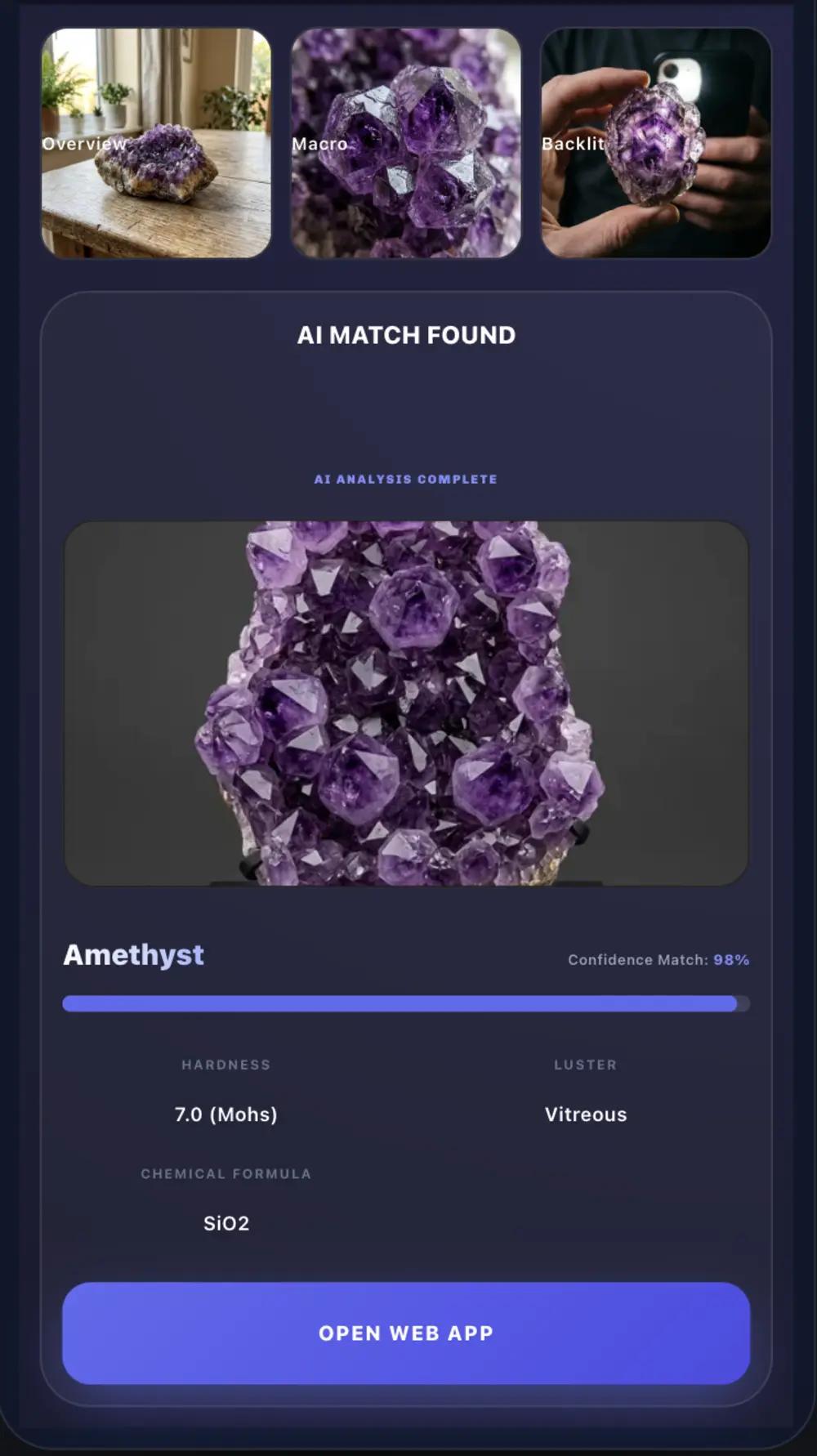
Use the diagnostic tool below to walk through these tests step-by-step and get a preliminary assessment of your gemstone.
Available in other languages
- enTurquoise Authenticity Test: Is Your Gemstone Real?
- ru Тест на подлинность бирюзы: как отличить оригинал от подделки?
- es Prueba de autenticidad de la turquesa: ¿Es real tu piedra preciosa?
- fr Test d'authenticité de la turquoise : votre pierre est-elle vraie ?
- de Türkis-Echtheitsprüfung: Ist Ihr Edelstein echt?
- it Test di autenticità del turchese: la tua gemma è vera ?
- pt Teste de autenticidade da turquesa: sua pedra é real?
- pl Test autentyczności turkusu: czy Twój kamień jest prawdziwy?
- uk Тест на справжність бірюзи: як відрізнити оригінал від подробки?
- tr Turkuaz Doğruluk Testi: Değerli Taşınız Gerçek mi?
- sv Turkos äkthetstest: Är din ädelsten äkta?
- no Turkis ekthettstest: Er smykkesteinen din ekte?
- hi फ़िरोज़ा प्रामाणिकता परीक्षण: क्या आपका रत्न असली है?
- id Tes Keaslian Pirus: Apakah Batu Permata Anda Asli?
Frequently Asked Questions
How can I tell the difference between real turquoise and dyed howlite?
The most reliable home tests are the Acetone test and the Scratch test. Real turquoise color will not transfer to a cotton swab dipped in acetone, and it is harder than howlite, making it more resistant to scratches from a steel blade.
Will acetone damage real turquoise?
Yes, potentially. While it won't remove the color of genuine turquoise, it can strip away protective stabilization resins (like epoxy) or waxes used to enhance the stone's durability. Always test on an inconspicuous area.
Is ‘stabilized turquoise’ considered real?
Yes. Stabilization is a widely accepted industry practice that involves injecting clear resin into porous turquoise to make it hard enough for jewelry. It is still genuine turquoise mineral, unlike dyed howlite or magnesite which are entirely different minerals.
What should I look for in a turquoise matrix?
In natural turquoise, the matrix (the dark veining) should feel slightly textured or indented under a fingernail. If the veins feel perfectly smooth or appear painted on, the stone is likely an imitation or a low-quality simulated stone.
Why is howlite so often used as fake turquoise?
Howlite has a natural grey veining that strongly resembles turquoise matrix. Because it is white and highly porous, it absorbs blue and green dyes easily, allowing it to mimic the appearance of expensive turquoise varieties at a fraction of the cost.