Lapis Lazuli vs Sodalite: How to Tell the Difference
Lapis Lazuli and Sodalite are two of the most popular blue gemstones in the world. They share a deep, captivating blue color that has fascinated humans for millennia. However, while Lapis Lazuli is a precious "rock" of history—used by Pharaohs and Renaissance artists—Sodalite is a common mineral often sold as its convincing (and much cheaper) double.
If you've ever held a blue stone and wondered, "Is my Lapis Lazuli real?" or "Is this actually Sodalite?", this guide is for you. We’ll break down the visual, chemical, and physical differences so you can identify your gemstone like a professional gemologist.
1. The "Golden" Test: Pyrite Inclusions
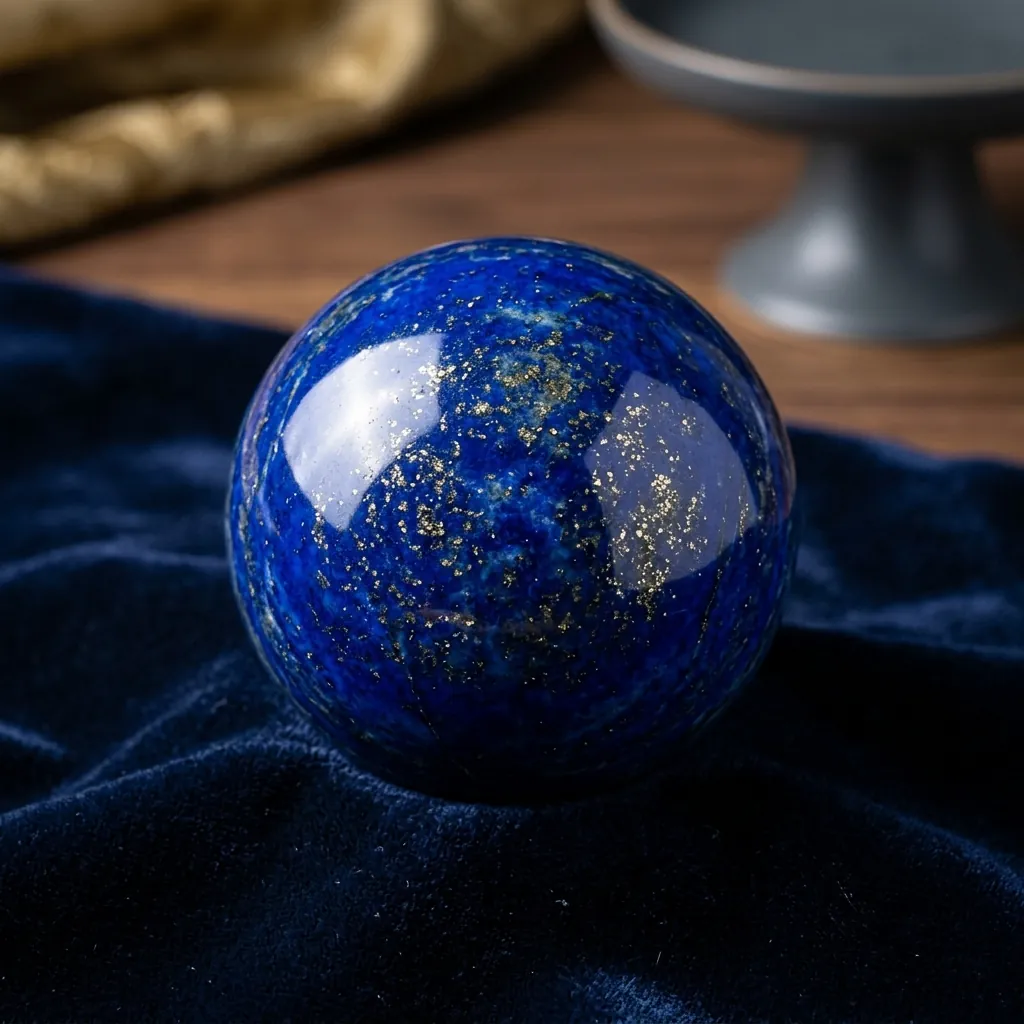
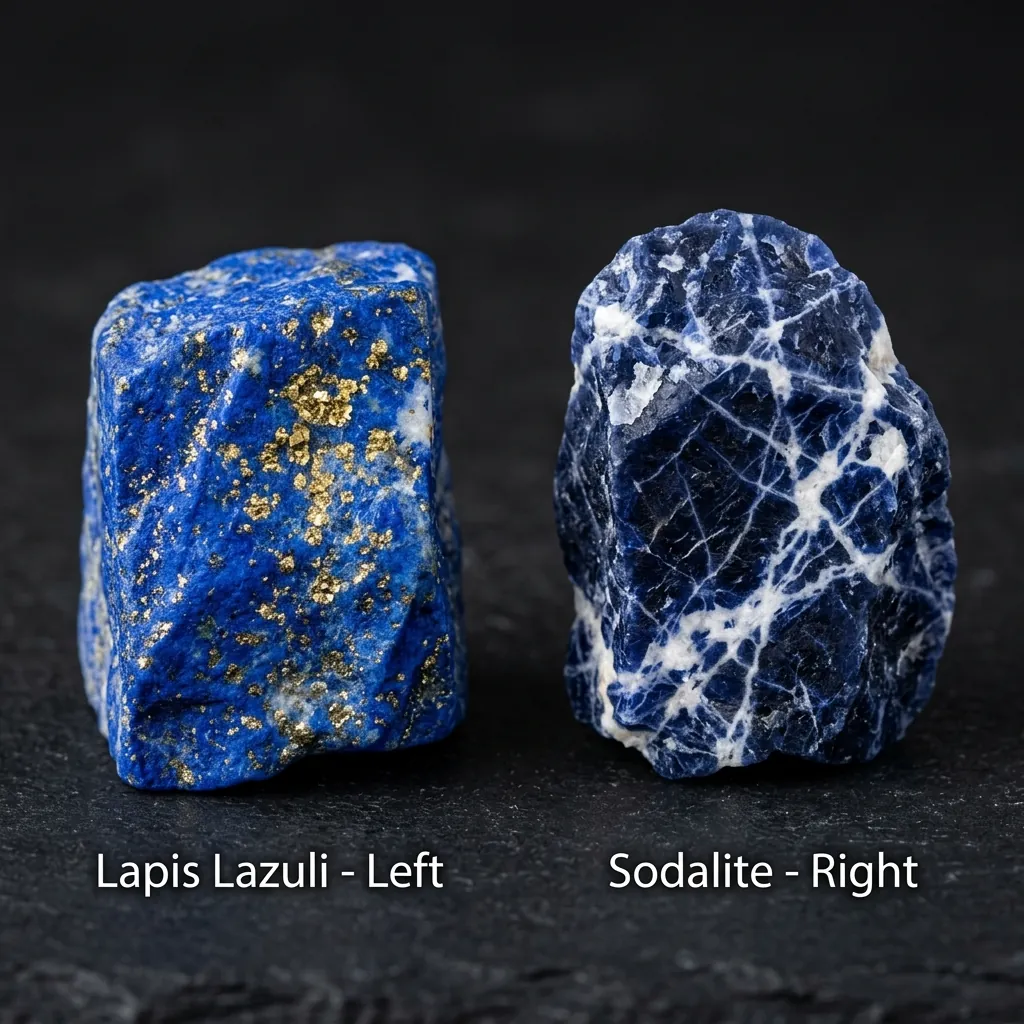
The most definitive way to identify Lapis Lazuli is by looking for Pyrite. Often called "Fool's Gold," Pyrite appears as small, metallic gold specks scattered throughout the stone, like stars in a night sky.
Key Rule:
- Lapis Lazuli: Almost always contains metallic Pyrite specks.
- Sodalite: Very rarely contains Pyrite. If your blue stone has tiny golden flecks, it is almost certainly Lapis Lazuli.
[!TIP] Use a 10x jeweler's loupe to inspect the specks. Real Pyrite will have a metallic luster that glitters under a single light source.
2. The Streak Test: A Scientific Verification
If you are willing to perform a destructive test on an unnoticeable part of the stone, the streak test is foolproof.
- Take your gemstone and rub it across a piece of unglazed porcelain (the back of a ceramic tile).
- Observe the color of the powdered trail (the streak) it leaves behind.
Results:
- Lapis Lazuli: Leaves a distinct bright blue (ultramarine) streak.
- Sodalite: Leaves a white or colorless streak.
- Dyed Jasper/Howlite: May leave a blue streak, but the color will rub off easily, and the stone will show white underneath.
3. Visual Differentiators: Royal Blue vs. Denim Blue
While both stones are blue, they belong to different parts of the spectrum.
Color Depth
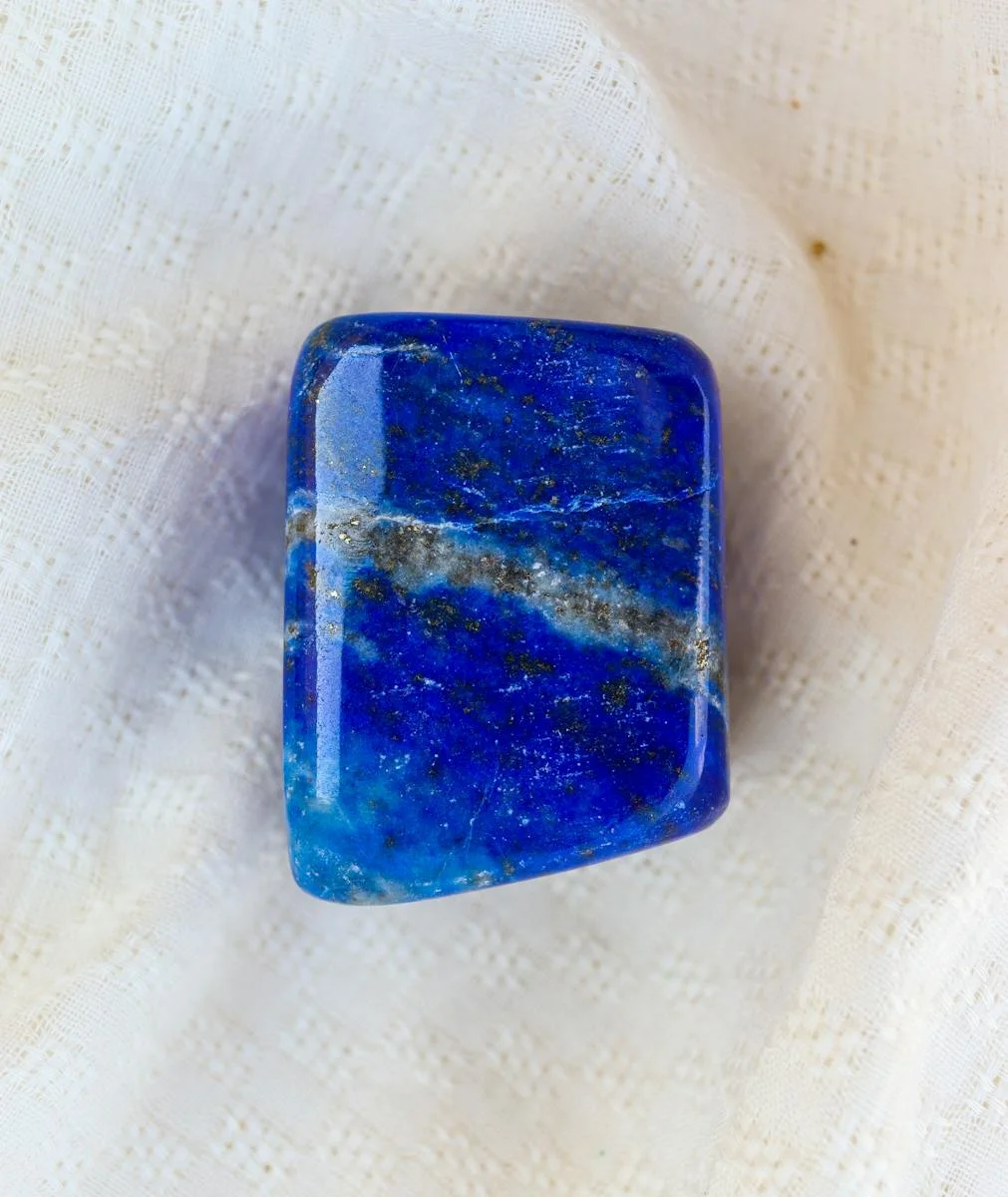
- Lapis Lazuli is typically a deep, rich ultramarine blue. It looks solid and intense, often compared to the deep sky at twilight.
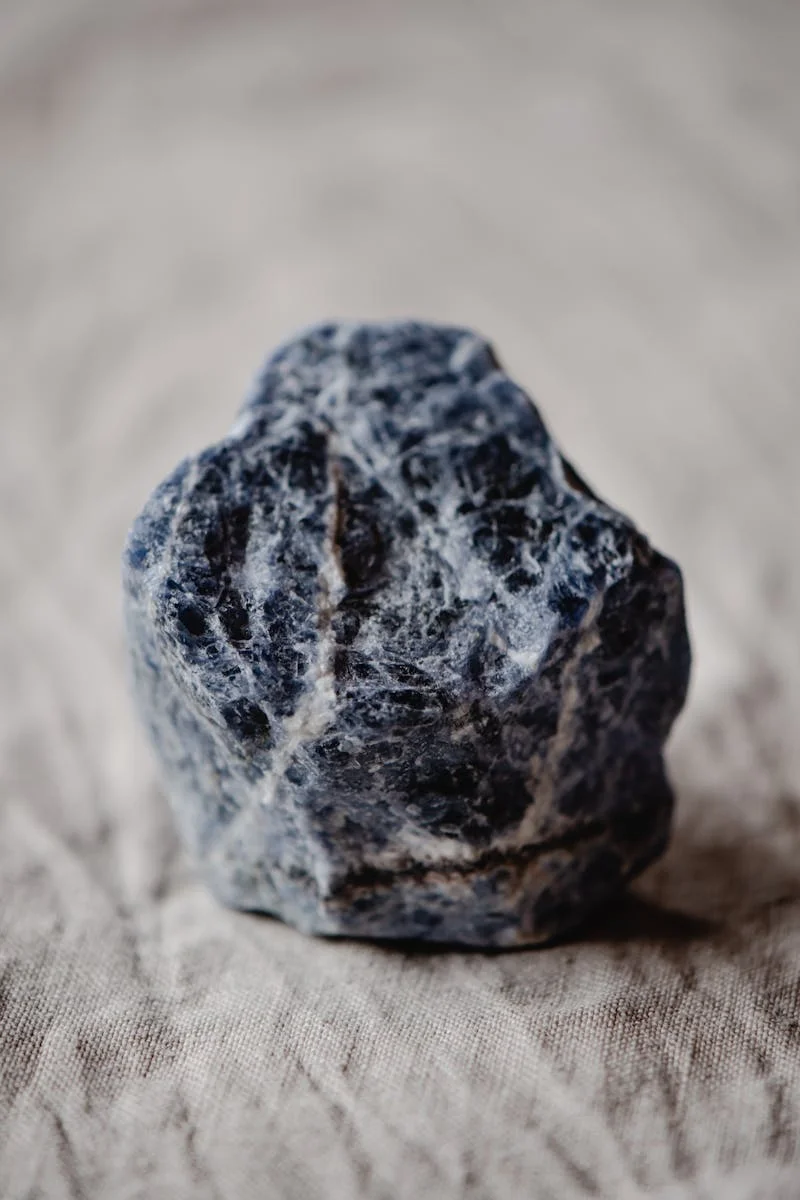
- Sodalite usually has a more muted, "denim" blue tone. It often leans towards a violet-gray or royal blue and is slightly more translucent on the edges.
Calcite Veining
Both stones can have white veins, which are usually Calcite.
- In Lapis Lazuli, calcite usually appears as small, scattered white flecks or thin lines.
- In Sodalite, white calcite veins are often prominent and "cloud-like," giving the stone a marbled look.
4. Real Mineral Examples
To truly understand the difference, witness how these stones appear in their natural, polished state.
5. Composition: Rock vs. Mineral
- Lapis Lazuli is a Rock: It is a combination of several minerals, primarily Lazurite (the blue part), Pyrite (the gold part), and Calcite (the white part).
- Sodalite is a Mineral: It is a single mineral species. While it is often a component inside Lapis Lazuli, pure Sodalite lacks the layering and multi-mineral complexity of a true Lapis rock.
5. Price and Market Reality
Because Lapis Lazuli is historically significant and increasingly difficult to mine (especially high-grade specimens from Afghanistan), it is significantly more expensive than Sodalite.
- Market Warning: Be wary of items labeled "Royal Blue Lapis" or "Blue Goldstone" that are very cheap. They are often dyed Sodalite or even glass. Sodalite is a beautiful stone in its own right, but it should not be sold at Lapis Lazuli prices.
Summary Table
| Feature | Lapis Lazuli | Sodalite |
|---|---|---|
| Gold Specks | Yes (Pyrite) | No |
| White Veins | Some (Calcite) | Prominent (Calcite) |
| Streak Color | Blue | White |
| Color Tone | Intense Royal Blue | Muted Denim Blue |
| Value | High | Low to Medium |
(Check our interactive comparison tool below for a detailed breakdown of all physical and chemical properties!)

Available in other languages
- enLapis Lazuli vs Sodalite Identification: How to Tell the Difference
- ru Как отличить лазурит от содалита: руководство по определению подлинности
- es Identificación de Lapislázuli vs Sodalita: Cómo diferenciarlos
- fr Identification Lapis-lazuli vs Sodalite : Comment faire la différence
- de Lapislazuli vs. Sodalit: Wie man den Unterschied erkennt
- it Identificazione Lapislazzuli vs Sodalite: come distinguerli
- pt Identificação Lápis-lazúli vs Sodalita: como diferenciá-los
- pl Identyfikacja Lapis-lazuli vs Sodalit: jak je rozróżnić
- uk Ідентифікація Лазурит vs Содаліт: як їх розрізнити
- tr Lapis Lazuli vs Sodalit Tanımlama Rehberi
- sv Identifiering Lapislazuli vs Sodalit: Hur man ser skillnad
- no Identifisering Lapislazuli vs Sodalitt: Hvordan se forskjellen
- hi लैपिस लाजुली बनाम सोडालाइट पहचान गाइड: अंतर कैसे पहचानें
- id Identifikasi Lapis Lazuli vs Sodalit: Cara Membedakannya
Frequently Asked Questions
Does Sodalite ever contain gold pyrite specks?
No, true Sodalite almost never contains metallic pyrite. If you see gold-colored metallic specks that glitter like metal, it is the single most reliable sign that you are looking at Lapis Lazuli, not Sodalite. Sodalite typically only has white or gray veining.
Is Sodalite considered a "fake" Lapis Lazuli?
Sodalite is a natural, distinct mineral and is beautiful in its own right—it is NOT a "fake" stone. However, because it is much more common and less expensive, it is frequently used as a substitute for Lapis Lazuli or sold under misleading names in the gemstone market.
How can I tell if my Lapis Lazuli has been dyed?
Rub a small, inconspicuous area of the stone with a cotton swab dipped in acetone (nail polish remover). If blue dye comes off onto the swab, the stone has been color-enhanced. Additionally, dyed stones often look "too perfect" and lack the natural variation in blue tones found in untreated Lapis.
Which stone is more durable for everyday jewelry wear?
Both stones have a similar hardness of 5.5 to 6 on the Mohs scale, making them relatively soft compared to quartz or sapphire. They are excellent for pendants, earrings, and brooches, but if used in rings, they should be in protective settings to prevent scratches from daily contact with harder surfaces.