Pyrite vs. Gold: The Definitive Guide to Identifying "Fool's Gold"
For as long as humans have valued precious metals, pyrite has played the role of the ultimate trickster. Nicknamed "Fool's Gold," this iron sulfide mineral has led many an amateur prospector to believe they’ve struck it rich. As a gemologist, I can tell you that while they may look similar at a casual glance, their physical and chemical properties are worlds apart. One is a noble element, the other a common compound.
In this guide, we will strip away the luster and look at the hard science. Whether you are in the field or examining a specimen at your desk, these diagnostic tests will separate the true treasure from the mineral trickster.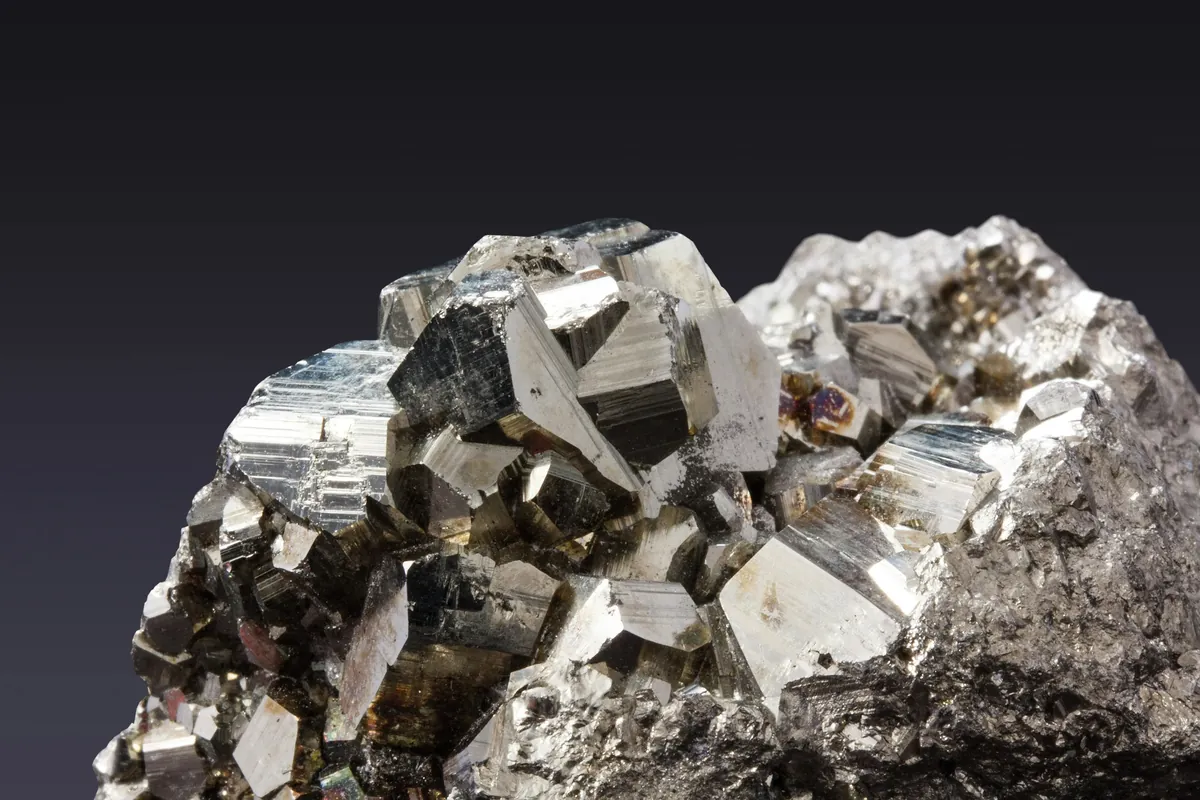
Side-by-Side: Real Gold vs. Pyrite
Before we dive into the laboratory tests, let’s look at two high-quality specimens representing the gold standard of each mineral.
- Gold (Au): An elemental metal that stays buttery yellow forever.
- Pyrite (FeS₂): An iron sulfide that can tarnish and oxidize into brownish or iridescent shades.
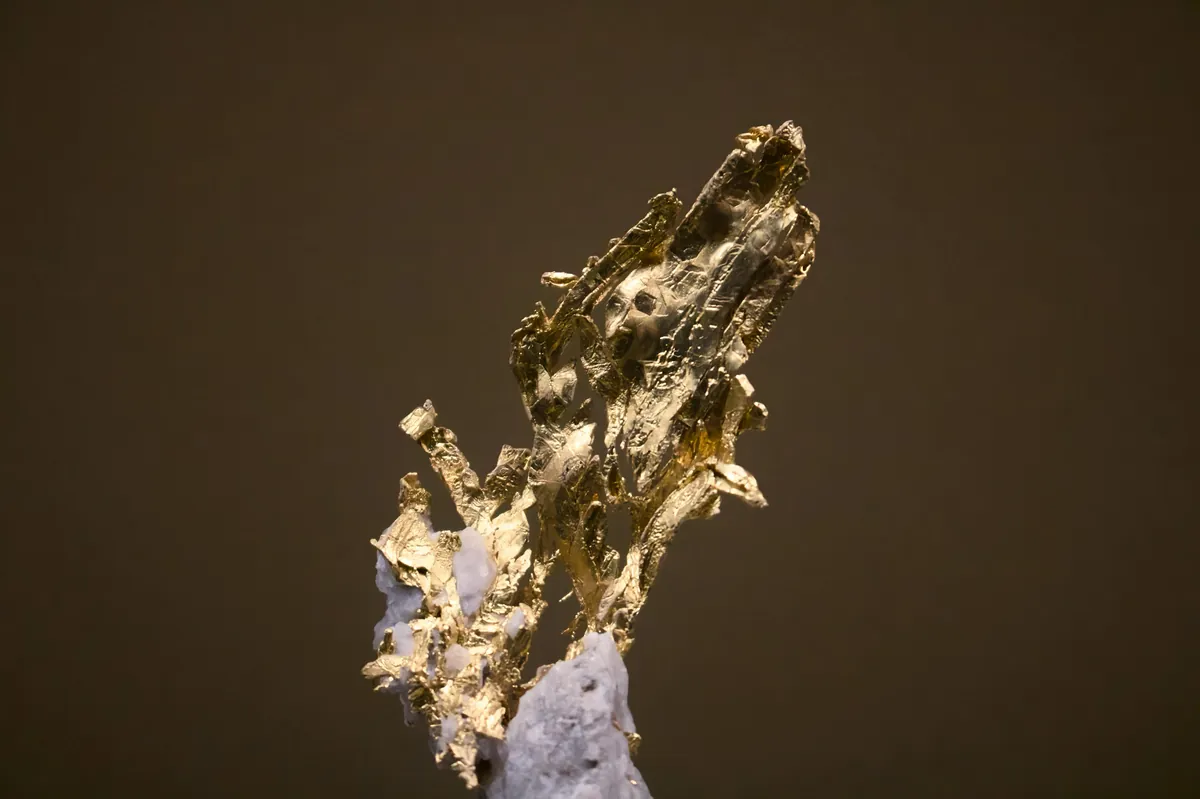
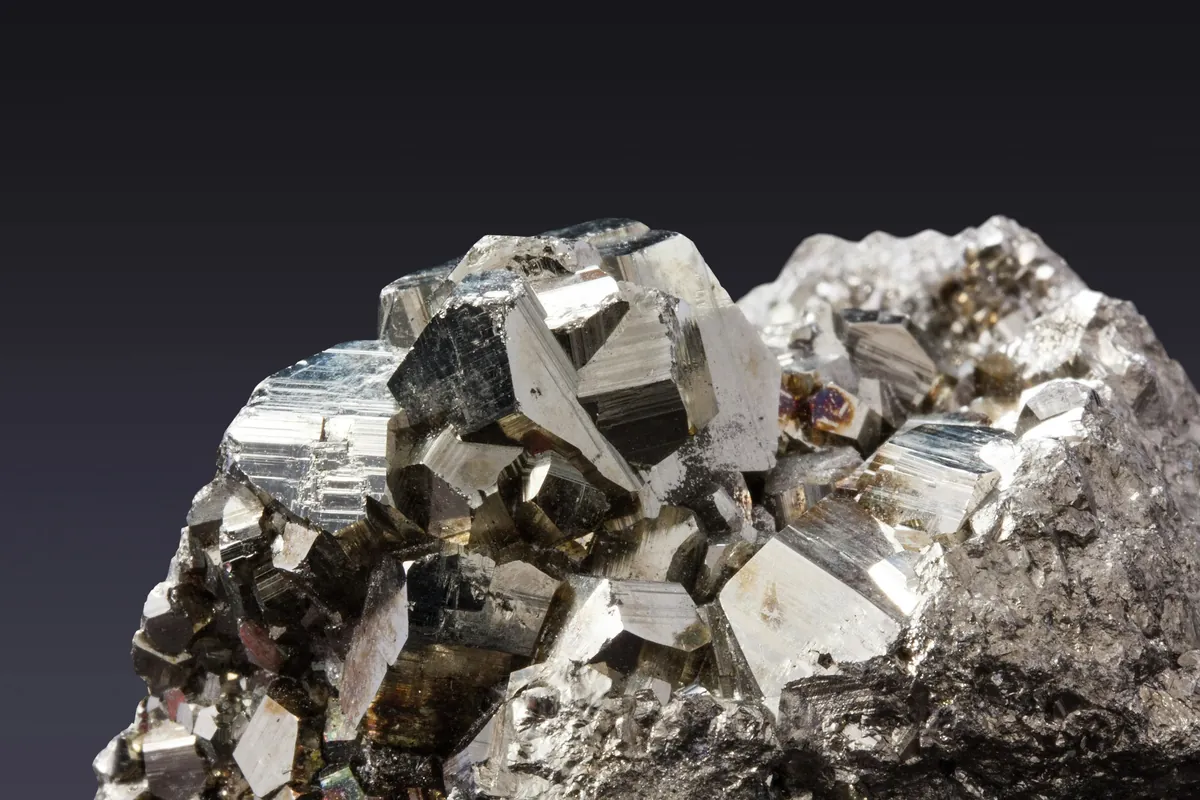
1. Visual Audit: Color and Luster
While both minerals share a metallic luster, the "flavor" of the yellow is a major tell for the practiced eye.
- Gold: Possesses a rich, deep "buttery" yellow. It maintains its color even when turned at different angles and never tarnishes. If you find a yellow metal that looks slightly dull or shows rainbow-like oxidation, it isn't gold.
- Pyrite: Has a "brassy" or "pale" gold color. It often looks slightly greenish or grayish in comparison to true gold. Under a loupe (10x magnification), you may notice fine parallel lines (striations) on the crystal faces—a feature gold never possesses.
2. The Hardness Test (Mohs Scale)
One of the most definitive differentiators is how hard the material is. If you have a copper penny or a piece of glass, you have a testing tool.
- Gold is Soft (2.5–3.0): Pure gold can be scratched by a copper penny or even a silver coin. In the field, a steel pocket knife will easily cut or scratch gold.
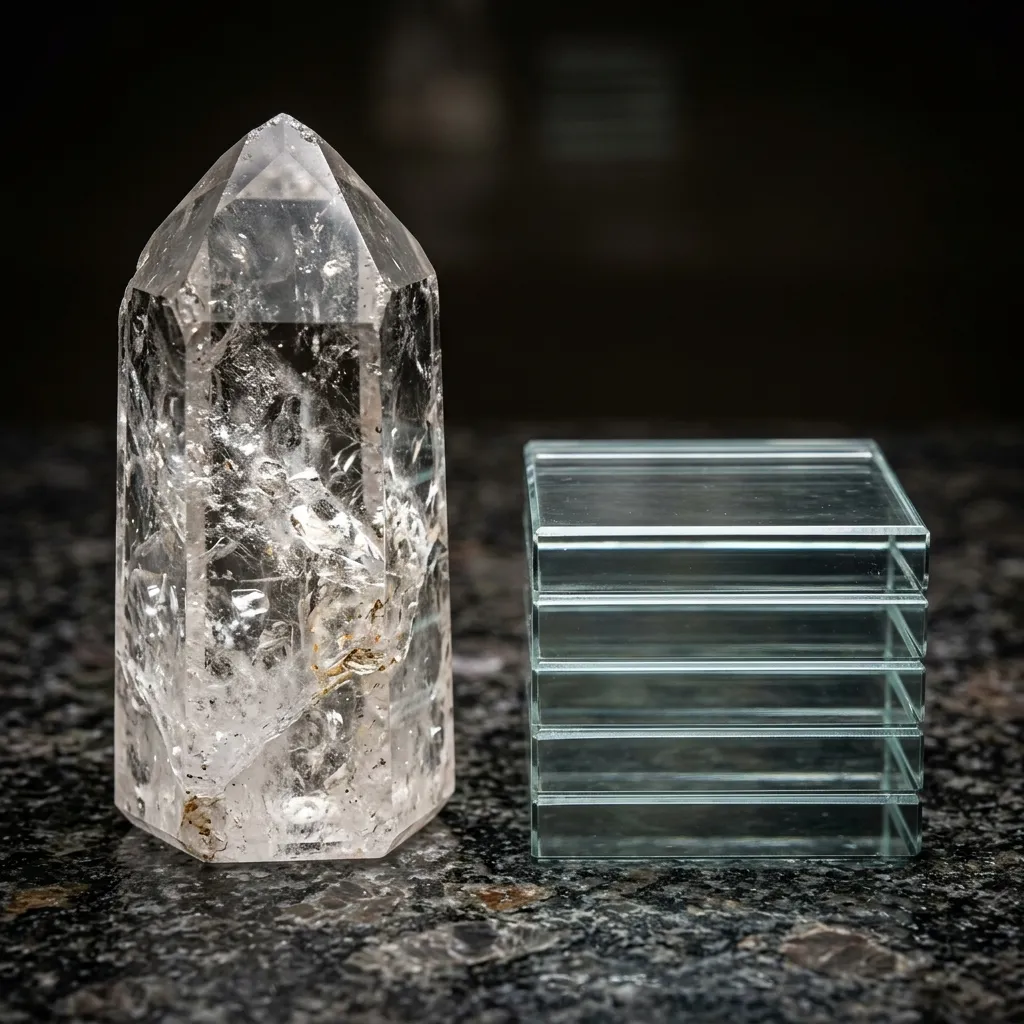
- Pyrite is Hard (6.0–6.5): Pyrite is significantly harder than gold. It cannot be scratched by a copper cent and will easily scratch a piece of glass. If your pocket knife can't leave a mark, you're holding pyrite.
3. Structural Integrity: Malleability vs. Brittleness
Gold and pyrite respond to physical stress in completely opposite ways due to their atomic bonding.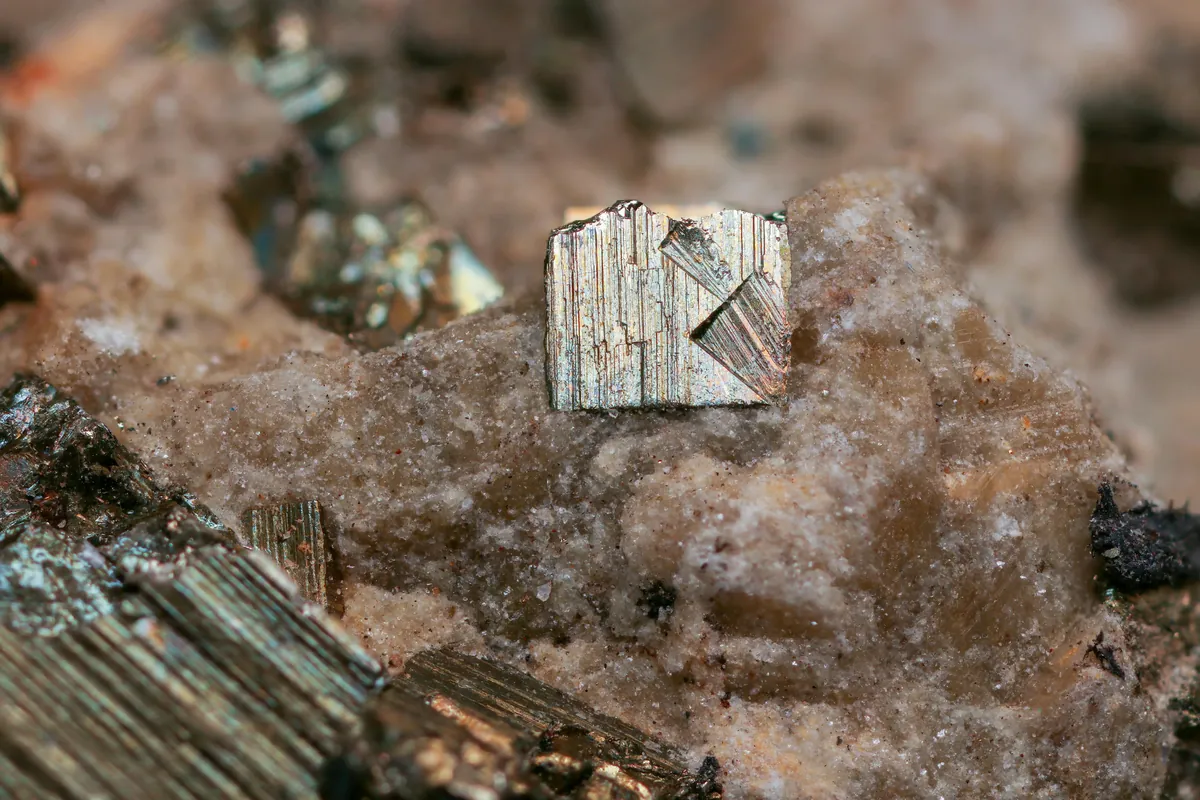
- Gold is Malleable: If you hit a piece of gold with a hammer, it will flatten or dent but will not break. This is why gold can be beaten into incredibly thin sheets.
- Pyrite is Brittle: If you hit pyrite, it shatters. It will break into fine powder or small, jagged shards. This brittleness is a hallmark of most sulfide minerals.
4. The Streak Test: The "Tell" That Never Fails
If you have a piece of unglazed porcelain (like the back of a bathroom tile), you have the ultimate diagnostic tool.
- Gold Streak: Rubbing gold across the tile produces a shining yellow streak, matching the color of the metal.
- Pyrite Streak: Rubbing pyrite across the tile produces a greenish-black to brownish-black streak. This dramatic color shift from "gold" to "black" is the most reliable way to identify pyrite instantly.
5. Density and Specific Gravity
Gold's weight is its calling card. It is nearly four times as heavy as an equivalent volume of pyrite.
- Gold's Specific Gravity: Approximately 19.3. Gold is one of the densest elements in the periodic table.
- Pyrite's Specific Gravity: Approximately 5.0. While pyrite feels "stony" and somewhat heavy, it lacks the unmistakable, sinking "heft" of true gold. If you "pan" for gold, the real nuggets will stay at the bottom, while the pyrite crystals are often washed away.
6. Pro Tip: The "Tell-Tale" Scent
Did you know your nose is a mineralogical tool? Because pyrite is an iron sulfide, it contains sulfur. If you strike a piece of pyrite with a hammer or rub it vigorously, it will often release a distinctive rotten egg smell. Real gold is entirely odorless.
💎 The Verdict: Quick field Reference
In the field, remember these four non-negotiables to avoid being a "fool":
- Hardness: Gold is soft (scratched by copper); pyrite is hard (scratches glass).
- Malleability: Gold dents; pyrite shatters.
- Streak Color: Gold leaves a yellow trail; pyrite leaves a black smudge.
- Oxygen: Gold never tarnishes; pyrite can look greenish or rusty.
Nature's deception can be convincing, but minerals never lie under scientific scrutiny.
Ready to test your own find? Use our interactive diagnostic tool below to follow the same logic professionals use in the lab.
Available in other languages
- enPyrite vs. Gold: How to Identify Fool's Gold (Expert Guide)
- ru Пирит или золото: как отличить «золото дураков» (Гид эксперта)
- es Pirita vs Oro: Cómo identificar el 'oro de los tontos' (Guía experta)
- fr Pyrite vs Or : Comment identifier l'or des fous (Guide de l'expert)
- de Pyrit vs. Gold: Wie man Katzengold erkennt (Expertenratgeber)
- it Pirite vs Oro: Come identificare l'oro degli stolti (Guida esperto)
- pt Pirita vs Ouro: Como identificar o Ouro de Tolo (Guia especializado)
- pl Pyrit vs Złoto: Jak rozpoznać złoto głupców
- uk Пірит проти золота: Як розпізнати золото дурнів
- tr Pirit mi Altın mı? Aptal Altınını Tanıma Rehberi
- sv Pyrit vs Guld: Hur man identifierar kattguld
- no Pyritt vs Gull: Hvordan identifisere kråkesølv
- hi पाइराइट बनाम सोना: 'बेवकूफों के सोने' की पहचान कैसे करें
- id Pirit vs Emas: Cara Mengidentifikasi 'Emas Palsu'
Frequently Asked Questions
What are the quickest visual clues to tell pyrite (fool’s gold) from real gold?
Color and luster: gold has a warm, buttery yellow and a metallic, almost oily shine; pyrite is a paler, brassy yellow with a glittery, sparkly appearance. Crystal habit: gold is usually found as irregular flakes, grains or nuggets; pyrite commonly forms cubic or pyritohedral crystals and may show striations on faces.
What simple field tests can I do to differentiate them?
Streak test: rub the sample on unglazed porcelain — gold leaves a yellow streak, pyrite leaves a greenish-black to brownish-black streak. Hardness/mallet test: gold is soft (malleable) and can be scratched or flattened with a knife or by gentle hammering; pyrite is brittle and will shatter or powder and is hard enough to scratch glass.
How reliable are chemical or professional tests, and are they safe?
Professional tests (XRF analyzers, fire assays, or certified assay labs) give definitive results. A common field chemical test uses nitric acid: gold is very resistant and won’t dissolve in nitric acid, while many sulfide minerals including pyrite will react. Chemical testing can be hazardous — wear protection and prefer a lab or experienced pros for chemicals.
How does heft and texture help identify gold versus pyrite?
Density (heft): gold is extremely dense (very heavy for its size) — a small gold nugget feels much heavier than a same-size pyrite piece. Texture: gold is smooth and malleable (it will deform but not shatter); pyrite feels more granular, brittle, and may break into angular fragments.
How can I tell the difference between gold and pyrite in water?
Gold is much denser (SG ~19.3) and will stay at the bottom of a pan, while pyrite (SG ~5.0) is lighter and more likely to be washed away with the movement of the water.
Does real gold have a smell?
No, real gold is odorless. Pyrite, however, often gives off a faint sulfur smell (like rotten eggs) when rubbed or struck, due to its sulfur content.
When should I send a sample to a lab or expert?
If the specimen looks promising (nugget-like, heavy, or associated with gold-bearing veins) or if you need a legally or commercially valid result, submit it to a certified assay lab or have it XRF-tested. Labs can provide exact concentration and are the safest, most reliable option. If unsure, consult a local geologist or reputable prospector before destructive testing.