Clear Quartz vs. Glass: The Secret to Spotting a Real Rock Crystal
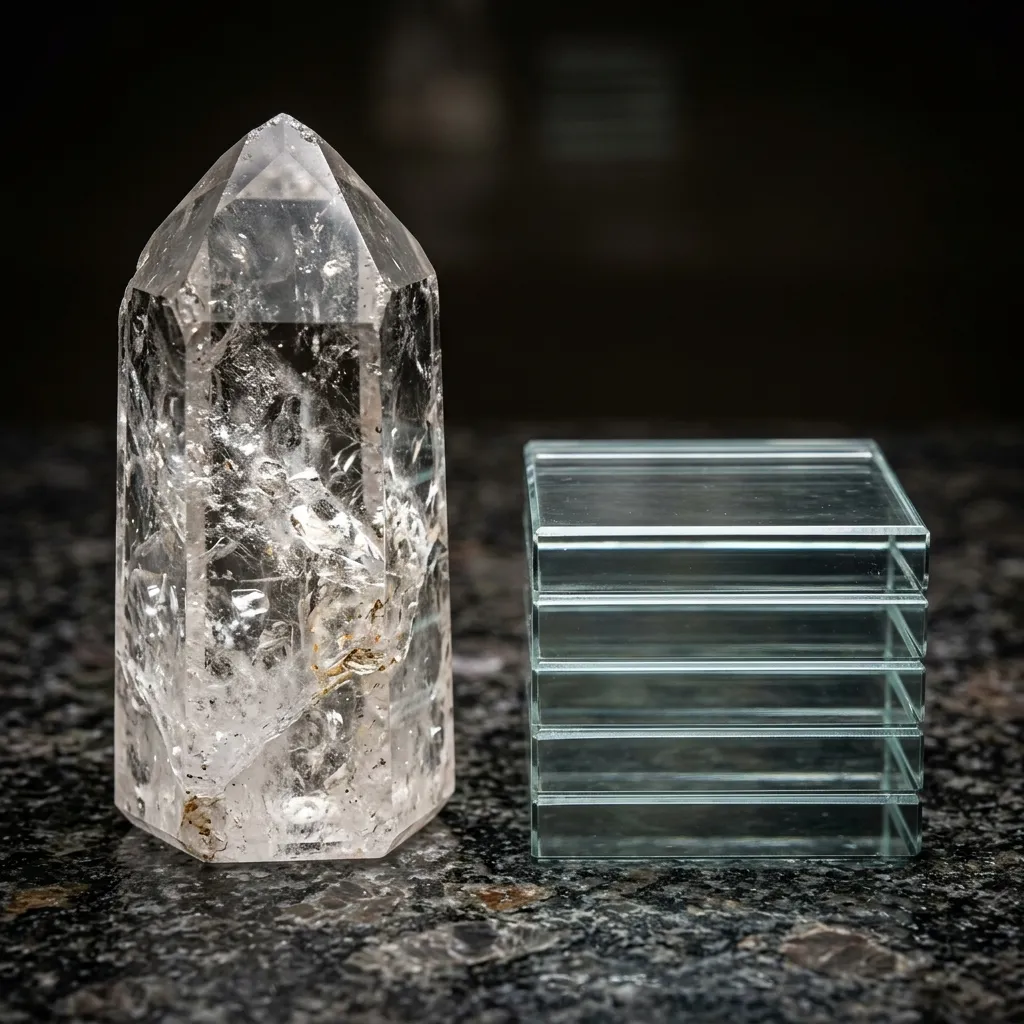
You’re walking through a weekend flea market or browsing an online storefront, and you see it: a stunning, water-clear pendant or a massive "crystal" sphere. The price seems like a steal. But your intuition kicks in. Is it a million-year-old masterpiece of Mother Nature, or just a melted-down beer bottle posing as high-vibration decor?
The world of gemstones is plagued by "imposter glass." While glass can be beautiful in its own right, paying crystal prices for factory-made silica is a heartbreak every collector wants to avoid.
Here is how you can tell the difference between clear quartz (rock crystal) and glass using nothing but your eyes, your hands, and a bit of geological know-how.
1. The "Bubble" Trap: Nature vs. The Factory
This is the fastest giveaway in the book. If you have a magnifying glass or even a good smartphone camera, zoom in deep into the stone.
The Glass Signature: Round Bubbles
Glass is manufactured by melting. During this process, air often gets trapped. Because glass is a liquid that cooled quickly into a solid, these air pockets stay perfectly round or almond-shaped. If you see even one tiny, perfect sphere of air inside that "crystal," you are looking at glass. Period.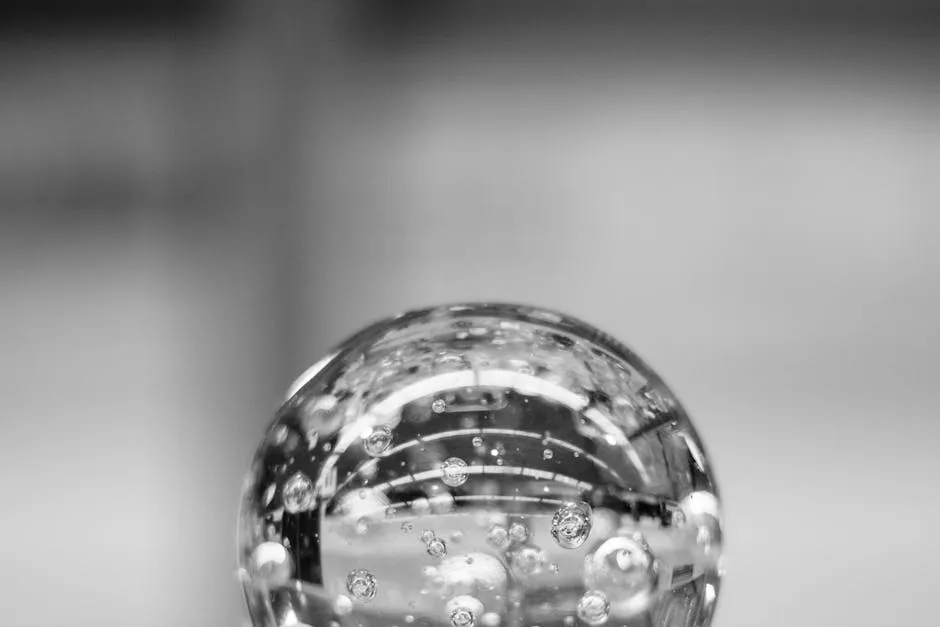
The Quartz Signature: The "Internal World"
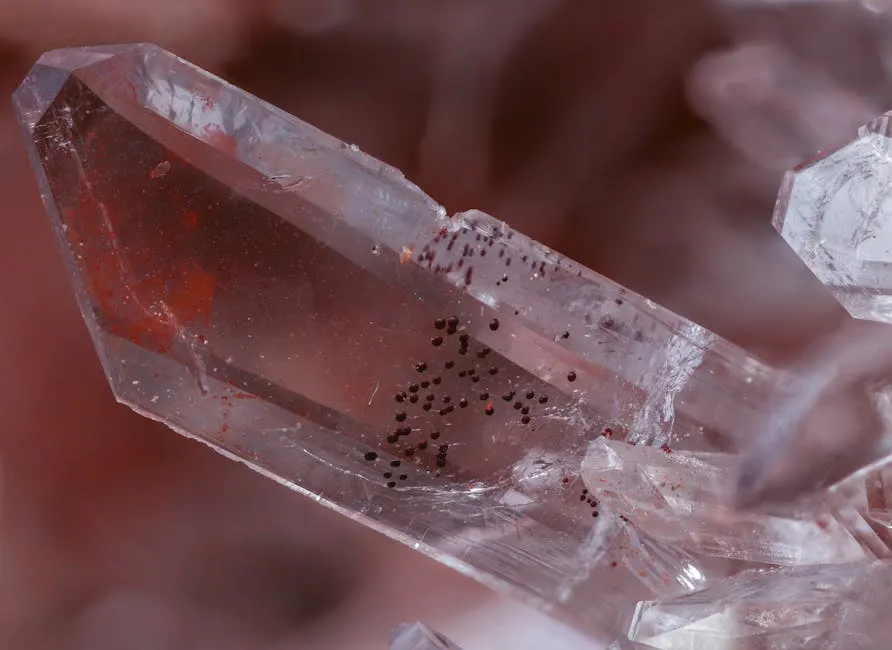
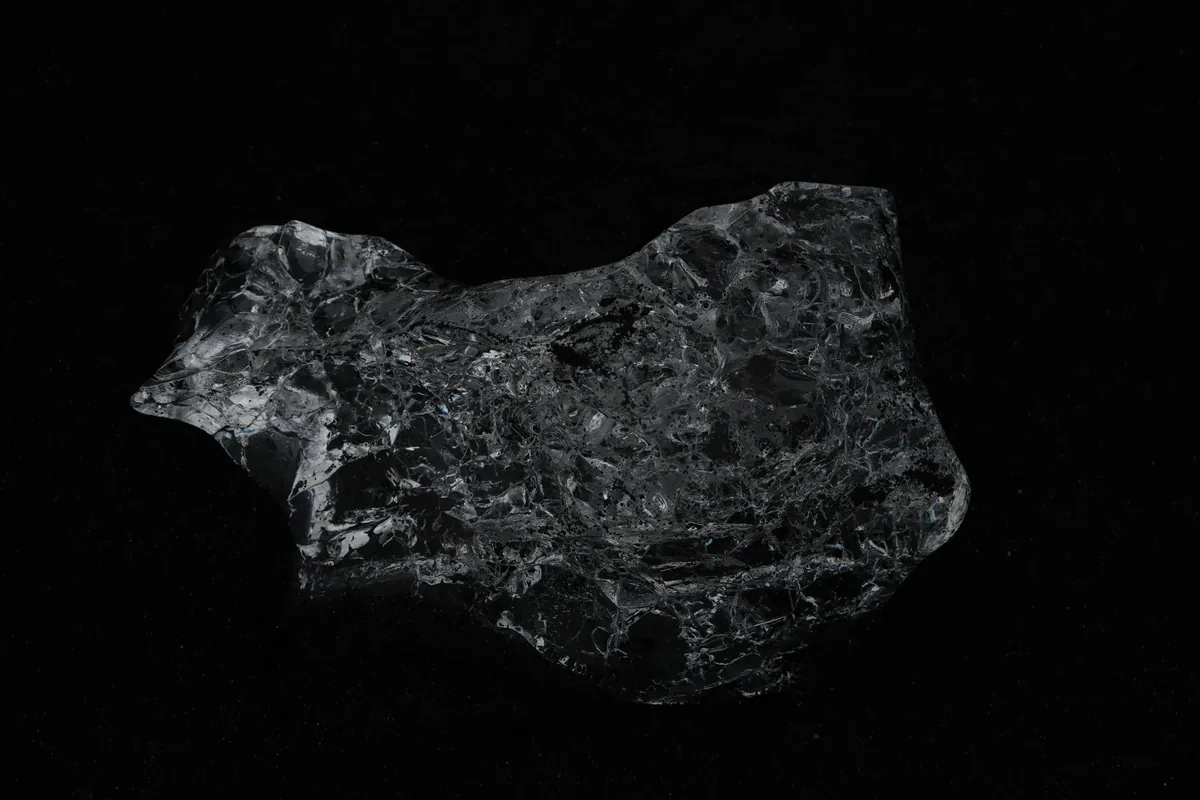
Quartz (rock crystal), on the other hand, grows over thousands of years deep in the earth. It rarely lacks "character." Instead of round bubbles, you’ll find:
- Fissures or "Fractures": These look like tiny, internal cracks that often reflect rainbows (we call them "fire").
- Phantoms or Veils: Ethereal, cloud-like structures that look like smoke caught in ice.
- Mineral Inclusions: Tiny, jagged crystals of other minerals (like black tourmaline needles or golden rutile) trapped inside.
[!TIP] Look for "Swirl Marks": If the interior looks like it was stirred (flow lines), it’s definitely glass.
2. The Thermal Test: Quartz is "Ice-Cold"
The ancient Greeks believed that clear quartz was actually water frozen so deeply that it could never thaw. They called it krystallos (ice). They weren't entirely wrong about the feeling.
The Touch Test
Quartz has a much higher thermal conductivity than glass. This means it draws heat away from your skin faster.
- Pick up the specimen.
- If it’s quartz, it will feel unnaturally cold to the touch, almost like a piece of metal.
- If it’s glass, it will feel room temperature or warm up significantly within seconds of you holding it.
The Tongue Tip (Pro Level): If you don’t mind looking a bit odd, the tip of your tongue is much more sensitive to temperature than your fingers. A real crystal will feel like an ice cube on your tongue; glass will just feel like... well, glass.
3. The Ultimate Test: Hardness (Mohs Scale)
If you’re still not sure, it’s time to get physical. But be warned: this is a destructive test.
[!WARNING] Important Disclaimer: The hardness test involves scratching. If the specimen is a valuable finished piece of jewelry or a polished carving, do not perform this test on a visible surface. It will leave a permanent mark on glass, and if you press too hard on a low-quality crystal, it might chip. Perform this only on an inconspicuous spot or a rough specimen.
How to Scratch
- Glass sits at about 5.5 on the Mohs scale.
- Clear Quartz is a solid 7.
Find a piece of common glass (like a bottle or a piece of window glass) and try to scratch it with a sharp corner of your specimen.
- A real rock crystal will cut through glass like butter.
- A glass "crystal" will usually just slide off or leave a faint, dusty mark that wipes away.
Conversely, try to scratch your specimen with a common steel file or a pocket knife (hardness approx. 5–5.5). If it leaves a permanent gouge, your "crystal" is glass.
4. Double Vision: The Birefringence Effect
Clear quartz is "doubly refractive." This is a fancy way of saying as light passes through, it splits into two rays.
The Line Test
- Draw a single, sharp black line on a piece of white paper.
- Place your specimen over the line.
- Look through the crystal.
If it’s a high-quality quartz, you might see the line double or appear blurred/shifted as you rotate the stone. Glass is "singly refractive" and will show you a single, clean line no matter how you turn it.
Summary: Real Rock Crystal or Glass?
| Feature | Clear Quartz (Rock Crystal) | Glass (Imitation) |
|---|---|---|
| Inclusions | Cracks, "veils", jagged minerals | Round air bubbles, swirl marks |
| Touch | Stays cold for a long time | Warms up quickly |
| Edges | Sharp, crisp facets | Often slightly rounded/soft |
| Hardness | Scratches glass; cannot be scratched by steel | Scratched by steel; cannot scratch quartz |
Mother Nature isn't perfect, and that’s her signature. If a crystal looks too perfect, too clear, and feels warm in your palm, it’s likely a man-made imposter. True quartz carries the weight and the chill of the earth within it.
Available in other languages
- enClear Quartz vs Glass: How to Identify Real Rock Crystal
- ru Настоящий горный хрусталь или стекло: как отличить
- es Cuarzo Cristal vs. Vidrio: Cómo Identificar la Pietra Real
- fr Cristal de Roche vs. Verre : Comment Identifier la Vraie Pierre
- de Bergkristall vs. Glas: So erkennen Sie echten Quarz
- it Quarzo Ialino vs. Vetro: Come Identificare la Pietra Vera
- pt Quartzo Hialino vs. Vidro: Como Identificar a Pedra Real
- pl Kwarc bezbarwny vs. Szkło: Jak rozpoznać prawdziwy kryształ?
- uk Гірський кришталь чи скло: Як розпізнати справжній кварц
- tr Dağ Kristali mi yoksa Cam mı? Nasıl Anlaşılır
- sv Äkta Bergkristall vs. Glas: Så ser du skillnaden
- no Ekte Bergkrystall vs. Glass: Slik ser du forskjellen
- hi स्फटिक बनाम कांच: असली पत्थर की पहचान कैसे करें
- id Kuarsa Bening vs Kaca: Cara Mengenali Kristal Gunung Asli
Frequently Asked Questions
How can I tell if a crystal is quartz or glass?
The most reliable methods are the hardness test (quartz scratches glass, but steel shouldn't scratch quartz), the temperature touch (quartz feels noticeably colder), and looking for internal structures. Glass often contains perfectly spherical air bubbles, while quartz has irregular inclusions or 'veils'.
Does real quartz have bubbles?
Genuine quartz never contains perfectly spherical air bubbles. If you see tiny round bubbles, it is almost certainly glass. However, quartz can have 'inclusions'—internal fractures, cloudy areas, or mineral needles—that might look like imperfections but aren't air bubbles.
Can glass scratch quartz?
No. On the Mohs scale of mineral hardness, quartz is a 7 and typical glass is between 5 and 5.5. Because quartz is harder, it will scratch glass, but glass cannot scratch quartz. If your specimen was scratched by a piece of glass, it is not real quartz.
Why does quartz feel colder than glass?
Quartz has high thermal conductivity, meaning it draws heat away from your skin much faster than glass (which is an insulator). This is why a real rock crystal feels icy cold when held to your cheek, while glass feels closer to room temperature.