Obsidian vs. Slag: The Ultimate Mineralogical Identification Guide
Few discoveries are as thrilling for a rockhound as finding a piece of deep, black, glassy material glinting in the sun. Is it obsidian, the legendary volcanic glass used by ancient civilizations for surgical tools and weapons? Or is it slag, the ubiquitous industrial byproduct of iron smelting and glass manufacturing?
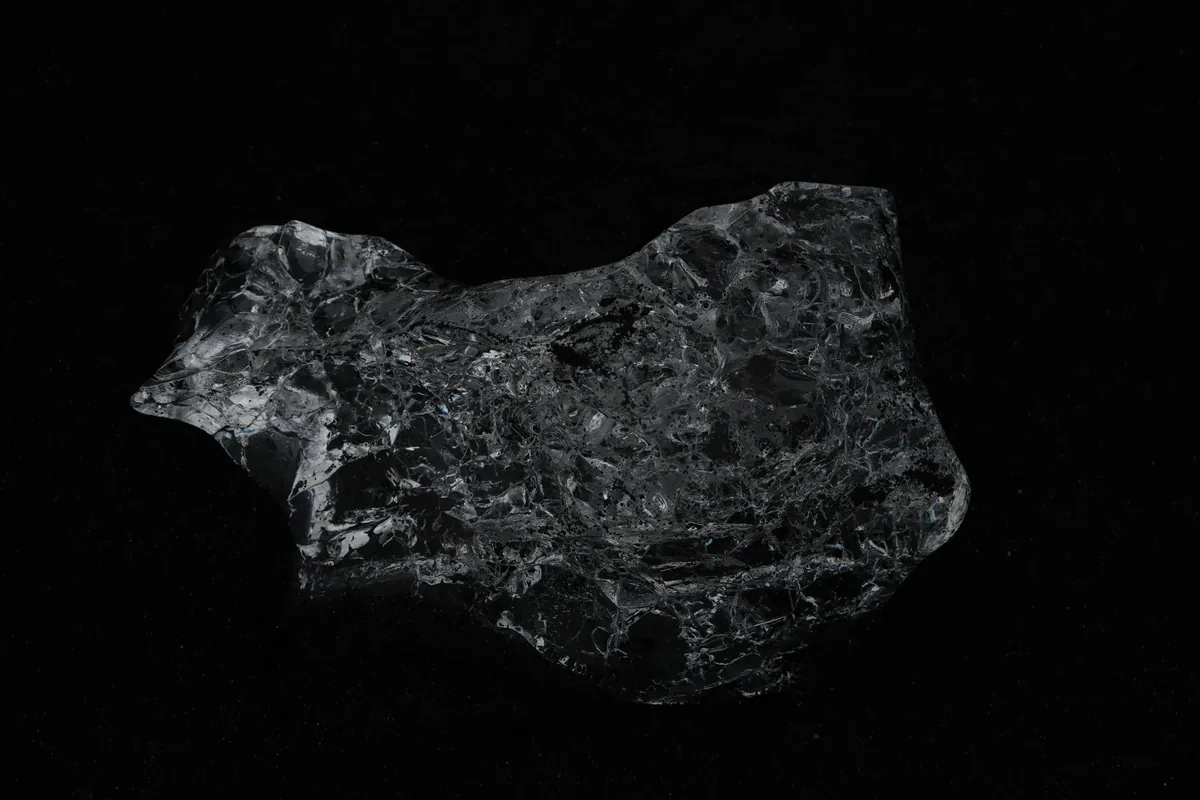
To the untrained eye, natural obsidian and man-made slag glass can look remarkably similar. Both exhibit the same vitreous luster and break with the sharp, curved edges known as conchoidal fractures. However, as a specialist mineralogist, I can assure you that the "fingerprints" of their creation are vastly different.
This guide will walk you through the precise diagnostic features from a gemological perspective, ensuring you can identify your find with professional accuracy.
1. Geological vs. Industrial Origins
To understand the difference, we must look at how these materials were "born."
What is Obsidian?
Obsidian is a natural extrusive igneous rock. it forms when felsic lava (rich in silica) cools so rapidly that individual atoms are unable to arrange themselves into a crystalline structure. Geologically, it is a "frozen liquid." It is primarily found in areas with geologically recent volcanic activity.
What is Slag?
Slag (specifically "glass slag" or "clinker") is a synthetic byproduct. When ore is smelted to extract metals like iron or copper, the impurities (silates, aluminates) rise to the top as a molten liquid. When this "waste" cools quickly, it forms a glassy material. Slag is found anywhere humans have processed metal or glass—near old railroads, abandoned foundries, or even as decorative landscaping rock.
2. The Bubble Test: Vesicles vs. Gas Bubbles
If you have a magnifying glass or a 10x jeweler’s loupe, this is your most reliable test.
Slag: Perfectly Spherical Bubbles
Because slag is created in a high-heat industrial furnace and poured out, it almost always traps air. These gas bubbles are typically perfectly spherical and can vary in size. If you see many round bubbles that look like they were frozen in soup, you are almost certainly looking at slag.
Obsidian: Stretched Vesicles (or none)
Obsidian forms from flowing lava. Any air trapped during its formation is subjected to extreme pressure and movement. Consequently, "bubbles" in obsidian (called vesicles) are rarely spherical. They are usually microscopic and, most importantly, stretched or flattened into needle-like shapes or flat planes. If you find a piece with large, round bubbles, it's a major red flag against it being natural obsidian.
3. Color and Uniformity Analysis
The "Unnatural" Slag Palette
While obsidian is famous for its "Rainbow," "Sheen," or "Snowflake" varieties, its base color is almost always translucent black, smoky grey, or mahogany brown.
Slag comes in a rainbow of colors that nature rarely produces in large glassy chunks. If your specimen is vibrant electric blue, emerald green, or deep purple, it is slag (often called "Leland Blue" or similar regional trade names). Furthermore, slag often shows swirling, chaotic patterns of different colors, whereas obsidian banding follows parallel flow lines.
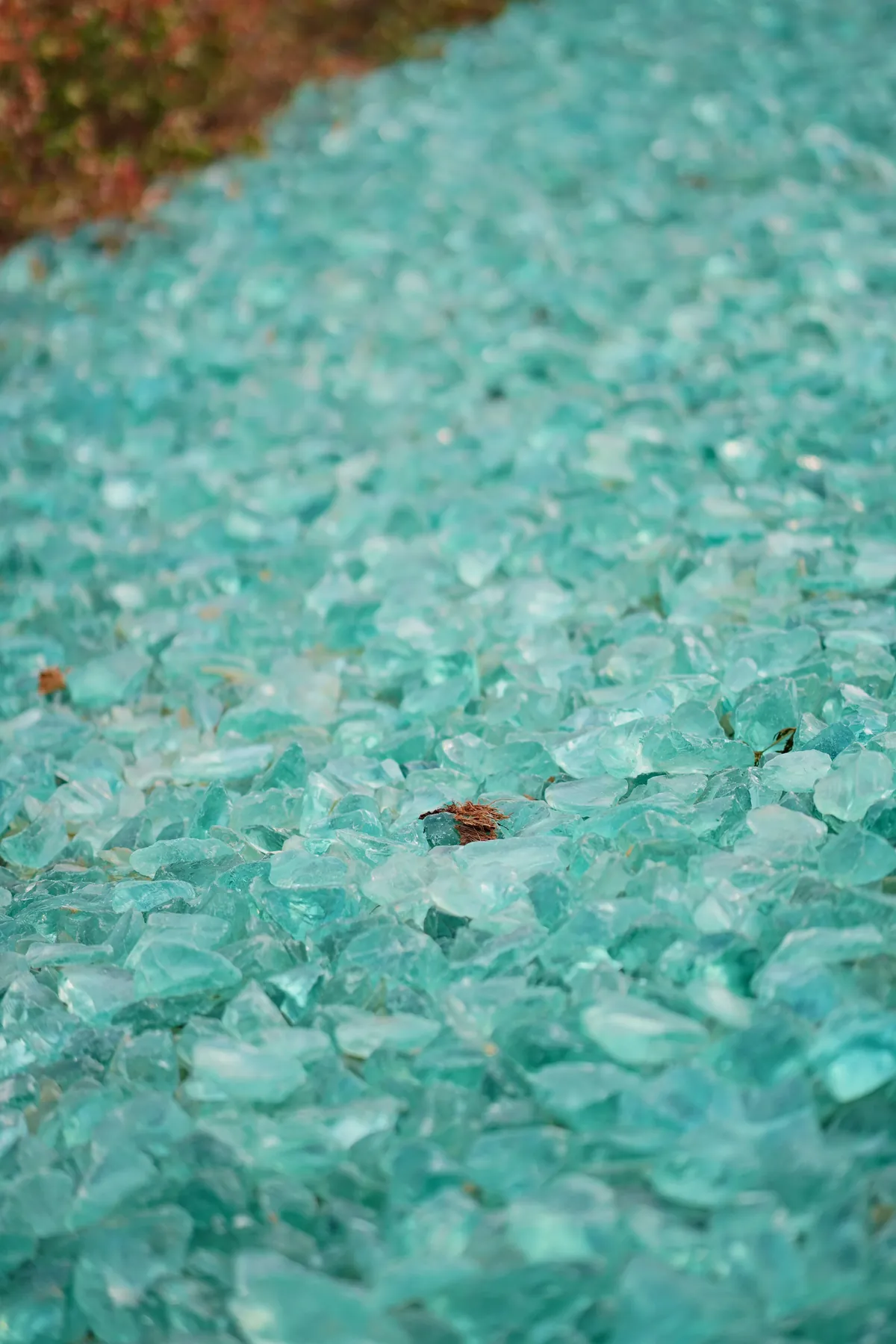
4. Luster and Surface Sculpturing
Surface Textures
Examine the "skin" of the rock (the part that hasn't been broken).
- Obsidian: Often has a "sculpted" look or a dull, weathered "cortex" from thousands of years of exposure to the elements.
- Slag: Often has a frothy or pitted surface (vesiculation) that looks like hardened foam. You may also see "scum" or metallic streaks on the surface where the metal-rich portions of the melt didn't fully separate.
5. Magnetism and Weight
The Magnet Test
Industrial slag often contains leftovers of the metal being extracted. If you have a strong neodymium magnet, try it on your rock. Many types of iron slag are strongly magnetic. Natural obsidian is almost never magnetic (unless it is exceptionally rich in magnetite inclusions, which is rare for the glassy variety).
Density
Slag can be significantly heavier than obsidian because of its high metallic content. If the rock feels "unnaturally heavy" for a piece of glass, it's a strong indicator of industrial origin.
6. Identification Checklist: Is It Real?
| Feature | Natural Obsidian | Industrial Slag |
|---|---|---|
| Bubble Shape | Stretched, flat, or microscopic | Perfectly spherical, varied sizes |
| Color | Black, Grey, Brown (Banded) | Blue, Green, Purple (Swirling) |
| Magnetism | Rarely magnetic | Often magnetic |
| Fracture | Clean, glass-like curves | Jagged curves with pits |
| Context | Near volcanic regions | Near railroads, mills, or old sites |
The Expert's Verdict
If your rock has spherical bubbles, a magnetic pull, or a swirled blue/green color, you've found a fascinating piece of industrial history: slag. If it is a solid, deep black with stretched inclusions and was found in a known volcanic province, you are likely holding a piece of natural obsidian.
When in doubt, remember that true obsidian is a window into the Earth's fiery heart, while slag is a relic of our industrial past. Both are collectors' items in their own right, but knowing the difference is the first step toward becoming a true mineralogist.

Available in other languages
- enObsidian vs. Slag: Identification Guide
- ru Обсидиан против шлака: гид по определению
- es Obsidiana vs. Escoria: Guía de Identificación
- fr Obsidienne vs Laitier : Guide d'Identification
- de Obsidian vs. Schlacke: Identifizierungsleitfaden
- it Ossidiana vs. Scoria: Guida all'Identificazione
- pt Obsidiana vs. Escória: Guia de Identificação
- pl Obsydian kontra Żużel: Jak odróżnić szkło wulkaniczne od przemysłowego
- uk Обсидіан проти Шлаку: Як відрізнити вулканічне скло від промислового
- tr Obsidyen ve Cüruf: Volkanik Cam ile Endüstriyel Cam Nasıl Ayırt Edilir
- sv Obsidian mot Slagg: Hur man skiljer vulkaniskt glas från industriellt
- no Obsidian mot Slagg: Hvordan skille vulkansk glass fra industrielt
- hi ओब्सीडियन बनाम स्लैग: ज्वालामुखी कांच और औद्योगिक कांच के बीच अंतर कैसे करें
- id Obsidian vs Terak: Cara Membedakan Kaca Vulkanik dengan Kaca Industri
Frequently Asked Questions
What visual clues most quickly separate obsidian from slag?
Obsidian is natural volcanic glass with a very glassy, uniform luster and often shows conchoidal (curved) fracture surfaces and flow banding; slag usually looks more irregular or frothy, can be multi‑colored or iridescent from oxidation, often has a rougher exterior and obvious vesicles (bubbles) or metallic flecks.
How useful are bubbles/vesicles for ID?
Very useful: slag frequently contains many round gas bubbles or cavities from industrial cooling, while true obsidian is usually denser, with few if any large spherical bubbles (it may show tiny vesicles or layers but not the frothy texture common to slag).
Can simple tests (hardness, density, magnetism) tell them apart?
Sometimes: obsidian has a Mohs hardness around 5–5.5 and specific gravity ~2.4–2.6; slag hardness and density are variable. Slag may be weakly magnetic if it contains iron metal — obsidian is not. These tests can help but are not definitive alone.
Do the edges or fracture patterns help?
Yes — obsidian breaks with very sharp, glassy, conchoidal edges (used historically for cutting tools). Slag fractures tend to be more chunky, crumbly or irregular and generally do not produce as uniformly sharp edges.
When should I get a professional test or worry about safety?
If identification matters for value, geology, or archaeology, or if you need certainty, request XRF, thin section petrography, or lab analysis. Always handle suspected obsidian or slag with care (sharp edges) and use gloves/eye protection; also consider the find location—near a volcano favors obsidian, near a scrapyard or smelter favors slag.